Let’s get one thing straight before we kick this off. When I say ‘moped’, I am not talking about those silent electric deliveries that nearly run you over on the pavement while you're waiting for a kebab. I’m talking about the noisy, smoky, slightly terrifying machines that started it all. If you want to understand where biking came from, you have to look at moped history. It is the root of the family tree.
Welcome to "What the Fork?". This is the new series where we walk you through the evolution of two wheels. We are starting right at the beginning: the early 1900s. Back then, roads were essentially mud tracks and health and safety was just a rumour. The moped wasn't a lifestyle choice; it was cheap transport for the masses. However, it evolved into something much cooler.
1. What Actually Is a Moped?
The word ‘moped’ gets thrown around a lot these days. People use it to describe anything with small wheels and a step-through frame. But if we are being technical (and I usually am), the definition is in the name. Motor. Plus. Pedal.
In true moped history, a moped had to have functioning pedals. You were supposed to be able to pedal it like a bicycle if the engine gave up. Which, let’s be honest, happened quite a bit back in the day. The pedals were also used to start the engine. You’d pedal like a maniac, pop the clutch, and hope the little two-stroke motor would burst into life before your legs gave out.
Nowadays the term is used legally to define a low-powered motorcycle, usually 50cc with a restricted top speed. But the spirit of the moped is about accessibility. It is the gateway drug to the heavy stuff.
2. The Early 1900s: Just Bolt an Engine On
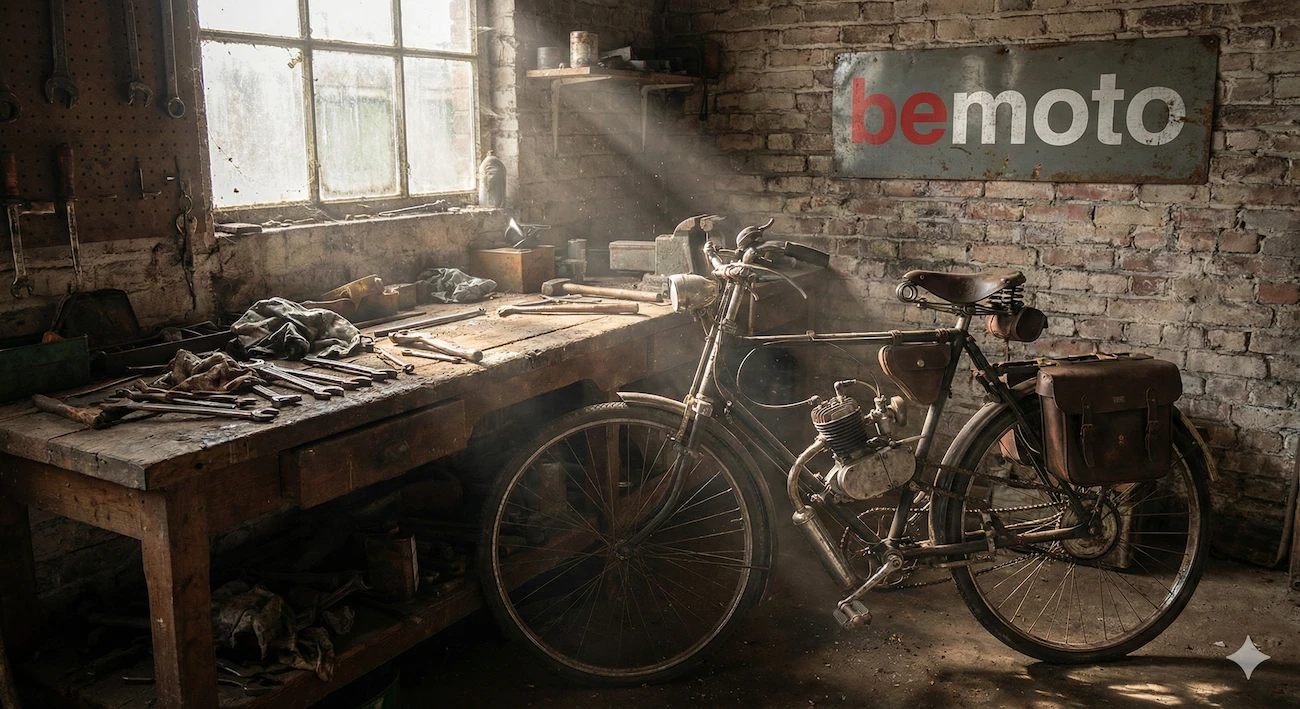
The start of moped history is pretty crude. At the turn of the 20th century, people looked at bicycles and thought, “This is too much effort.” The solution was simple. They strapped an engine to a bicycle frame. These were often called ‘clip-on’ engines.
You had engines mounted over the front wheel, inside the frame triangle, or over the rear wheel. It was chaos. The brakes were usually blocks of rubber rubbing against the rim, the suspension was non-existent, and the roads were cobbled. You needed a spine of steel to ride these things.
- The Cyclemaster: This was a complete wheel with an engine built into the hub. You just swapped your back bicycle wheel for this heavy lump and off you went.
- The Vélosolex: A French icon. It had a motor sitting on top of the front wheel that drove it via a friction roller. It worked great until it rained, then the roller just slipped on the wet tyre and you went nowhere.
- The Autocycle: These looked a bit more like motorbikes but still had pedals. They were hugely popular in Britain during and after the wars because they were cheap to run.
It wasn't glamorous. But it got the working class moving. It meant you could live further from the factory. It gave people freedom.
Got a Classic 50cc?
From barn finds to pristine restorations, we know how to cover the classics.
Get a Scooter & Moped Quote3. The Post-War Boom
After World War II, Europe was broke. Nobody had money for cars. This is where moped history really takes off. Manufacturers needed to build something cheap, reliable, and fuel-efficient. The moped was the answer.
In the UK, we had the 'Cyclemotor'. In Germany and Italy, they were building small displacement bikes that would eventually evolve into the scooters we know today. But the moped held its ground. It was distinct from the scooter because of those big wheels and pedals. It handled better on rough roads than the tiny wheels of a Vespa.
This era solidified the moped's place in society. It wasn't just a hobbyist's toy anymore; it was a vital tool for rebuilding the economy. Workers rode them to the docks, nurses rode them to visit patients, and postmen rode them to deliver the mail.
The Sixteener Special and the FS1-E
Fast forward to the 1970s. This is the golden era for many British bikers. The law changed. If you were sixteen years old, you could ride a moped. But the definition of a moped was strictly "a machine of less than 50cc equipped with pedals".
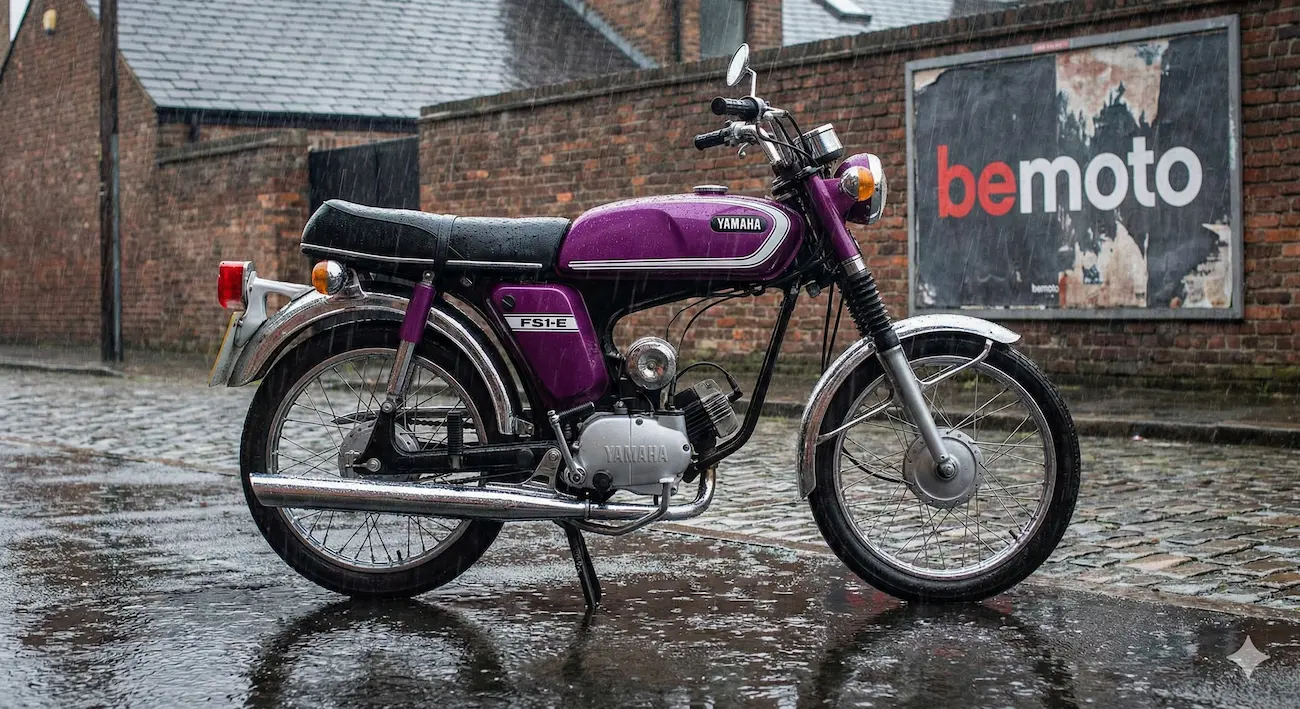
Manufacturers saw a loophole. They built proper motorcycles—with tanks, seats, and gears—and then stuck a useless pair of pedals on them to keep the government happy. This slice of moped history gave us the "Sports Moped". The king of them all was the Yamaha FS1-E. The 'Fizzy'.
Ask anyone who grew up in the 70s about the Fizzy. Their eyes will glaze over. It was fast (for a 50cc). It looked like a big bike. And most importantly, the pedals could be locked in a forward position to look like footpegs. You only used them as pedals if you ran out of petrol or the police were watching.
If you're looking at buying a classic sports moped with pedals, check the crank mechanism. On many of these old bikes, the pedal shafts seize up because nobody has used them since 1976. It's a proper pain to strip down if it's rusted solid.

- Yamaha FS1-E: The legend. Purple tank, distinctive smell of two-stroke oil, and the sound of freedom.
- Suzuki AP50: The Fizzy’s main rival. It was arguably a better bike, but the Fizzy had the cult following.
- Honda SS50: The four-stroke option. It was reliable and quiet. Which meant no teenager wanted one. We wanted noise and smoke.
- Garelli Tiger Cross: An Italian exotic. It looked like a scrambler and was bright yellow. If you had one of these, you were the coolest kid in school.
This era defined a generation. It taught kids clutch control, gear changes, and how to fix a fouled spark plug at the side of the road in the pouring rain. It was an apprenticeship for life on two wheels.
4. The End of the Pedal
All good things come to an end. In 1977, the UK government decided that 16-year-olds were having too much fun. They changed the law again. The pedal requirement was dropped, but mopeds were now restricted to a top speed of 30mph.
This killed the sports moped overnight. If a bike is restricted to 30mph, it doesn't matter how sporty it looks; you aren't going anywhere fast. This shift in moped history led to the rise of the plastic scooter and the eventual "twist and go" era.
However, the legacy remains. Those riders who started on Fizzies graduated to 250s, then 350LCs, and eventually Fireblades. The moped was the nursery slope for the superbike boom of the 90s.
5. Why Mopeds Still Matter
You might think mopeds are just museum pieces now. You’d be wrong. There is a massive scene for classic mopeds. People restore them, race them, and modify them. There are endurance races dedicated entirely to sub-50cc bikes. It is hilarious and competitive in equal measure.
Plus, the modern equivalent serves the same purpose. The 50cc machine is still the first step for most riders. Whether it's a geared 50 or a variomatic scooter, it teaches you roadcraft. It teaches you that car drivers haven't seen you. It teaches you that drain covers are slippery when wet.
Insuring a Piece of History
If you are looking to buy a classic moped, you need to think about insurance. These things are desirable. A mint condition FS1-E can fetch silly money these days. You don't want to leave it parked in town with just a steering lock.
Theft is a real risk. They are light enough to be picked up and thrown in the back of a van in seconds. We see it happen too often.
Then there are the modifications. In moped history, tuning was standard practice. Skimming the cylinder head, drilling the airbox, fitting a big bore kit. If you are riding a classic that has had "work" done, you need to tell your insurer. At BeMoto, we love a modified bike, but we need to know what we are dealing with.
Whether you have a rusted barn find or a pristine restoration, getting the right cover is essential. You want an insurer who knows the difference between a Fizzy and a hairdryer.
Check out our Scooter & Moped Insurance if you are looking to get on the road. And if you have something truly special locked away in the shed, our Classic Motorbike Insurance might be more up your street.
We also know that once you buy one, you usually buy another. If your garage is starting to look like a timeline of moped history, look into Multi Bike Insurance. It saves the hassle of having ten different renewal dates.
Final thoughts
The moped is humble. It isn't fast. It isn't particularly comfortable. But it is important. Without it, the motorcycle industry wouldn't be where it is today. It got the world moving when money was tight, and it gave teenagers their first taste of independence.
So next time you see a kid on a 50cc screaming its heart out at 28mph, don't get angry. Give them a nod. They are just starting their journey. And who knows? In forty years, they might be writing a blog about the "good old days" of petrol engines.
For more on the rules of the road and how to stay legal on your 50cc, you can check the government guidelines on riding a moped or motorcycle.