
If you mention scooters to your average sports bike rider, they might roll their eyes. They picture a teenager in a tracksuit doing wheelies on a 50cc twist-and-go. But that is only a tiny slice of the pie. The reality is that scooter history is one of the most important chapters in the book of motorcycling.
Welcome back to "What the Fork?". In this series, we are stripping back the layers of biking evolution. Last time, we looked at the humble moped. This time, we are stepping up a gear (literally, for the classic lads). We are talking about the machine that put Italy on wheels and caused a riot on Brighton beach. The scooter.
1. Out of the Rubble: The 1946 Revolution
To understand scooter history, you have to look at the mess Europe was in after World War II. Italy had been bombed heavily. The roads were destroyed, the factories were in ruins, and nobody had two pennies to rub together. They needed transport that was cheap, covered the rider from road debris (because the roads were rubble), and didn't require swinging a leg over like a horse.
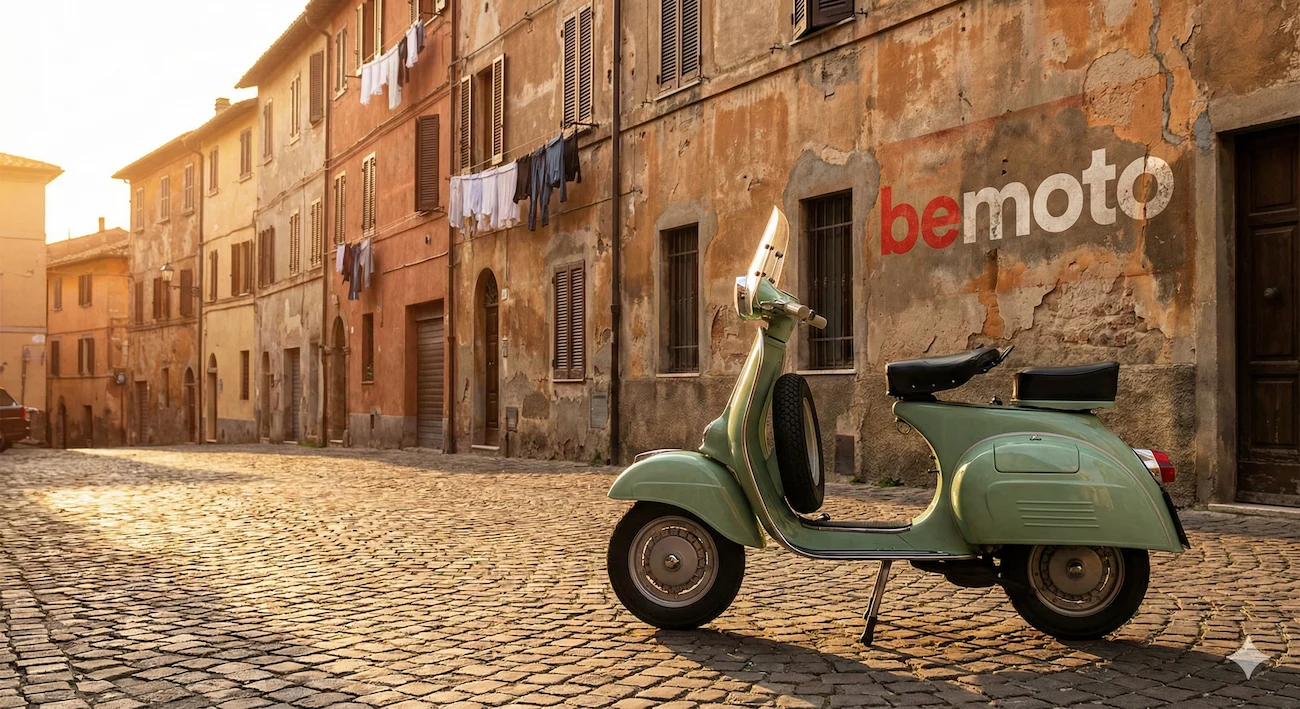
Enter Piaggio. They were an aircraft manufacturer that wasn't allowed to build planes anymore. So, Enrico Piaggio took the starter motor from an aircraft engine and some small landing gear wheels, and he asked Corradino D’Ascanio to design a bike. D’Ascanio actually hated motorbikes. He thought they were dirty and difficult to ride.
So he designed the opposite. He put the engine over the back wheel to eliminate the greasy chain. He put a shield on the front to protect the legs. And he made it step-through so women could ride it in skirts. The result was the Vespa (Wasp).
Mod or Modern?
Whether you ride a classic Lambretta or a new Forza, we have the right cover for you.
Get a Scooter Quote2. The Rivalry: Vespa vs Lambretta
Of course, one good idea breeds competition. While Piaggio was pushing the Vespa, another Italian industrial giant, Innocenti, launched the Lambretta in 1947.
This rivalry is the heartbeat of scooter history. It is the Ford vs Chevy or Oasis vs Blur of the two-wheeled world.
- The Vespa: Pressed steel monocoque frame. Curvy, organic shapes. Single-sided front fork.
- The Lambretta: Tubular steel frame with body panels bolted on. Longer, lower, and arguably more stable at speed.
The debate over which is better still causes arguments in pubs today. The Vespa was generally seen as the more reliable "everyman" machine, while the Lambretta was often the tuner's choice because the engine was easier to work on and modify.
3. The British Invasion: Mods and Rockers
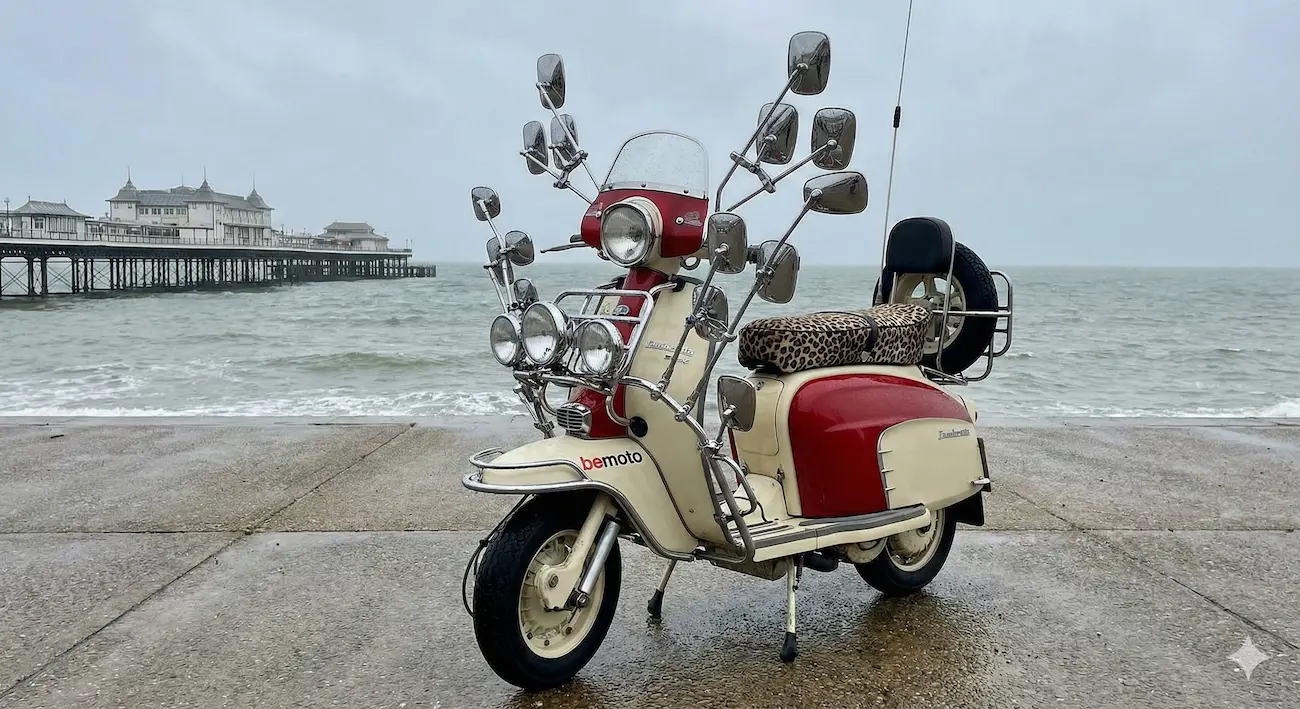
By the 1960s, the scooter had arrived in Britain. But it wasn't just cheap transport anymore; it was a fashion statement. The "Mods" adopted the scooter as their chariot of choice. It was clean (you could wear a sharp Italian suit and not get covered in oil) and it looked cool.
But the Mods had a problem. They liked to look good, but they also liked to protect their expensive suits. So they started adding mirrors, crash bars, and windscreens. Then they started wearing US Army parkas to keep the rain off.
This clashed with the "Rockers"—the leather-clad bikers riding Triumphs and BSAs. The media loved to hype up the violence, culminating in the infamous beach fights at Brighton and Margate. In reality, most of it was just posturing, but it cemented the scooter's place in British pop culture.
If you are buying a classic scooter, check the floorboards under the rubber mats. That pressed steel frame is basically a bucket for catching rainwater. If the rust is deep there, the structural integrity of the whole bike is compromised.

4. The Modern Era: Twist and Go
Scooter history took a massive turn in the 80s and 90s. The gears disappeared. The CVT (Continuously Variable Transmission) arrived. Suddenly, you didn't need to know how to use a clutch. You just twisted the throttle and went.
This opened up two wheels to millions of new people. The Honda Melody, the Peugeot Speedfight, the Yamaha Aerox. These bikes became the standard transport for 16-year-olds everywhere.
But then, the scooter grew up. Manufacturers realised that if you put a big engine in a scooter frame, you got a very comfortable touring machine. The "Maxi Scooter" was born. Bikes like the Suzuki Burgman 650 and the Yamaha TMAX proved that you could have scooter comfort with motorbike performance. You can now buy scooters that will happily sit at 100mph on the motorway, complete with heated seats and electric windscreens.
5. Why Scooters Are Still King of the City
There is a reason why every city in Europe is swarming with scooters. They work. They filter through traffic better than a wide adventure bike with panniers. They have under-seat storage for your helmet. They keep your feet dry when you hit a puddle.
Even the hardcore bikers at BeMoto have to admit that for getting across London at 5pm on a rainy Tuesday, a scooter is the superior tool.

Insuring the Icon
From an insurance perspective, scooters are an interesting mixed bag.
- Theft: Unfortunately, they are high risk. They are light and easy to steal. If you own a scooter, especially in a city, you need heavy-duty security.
- Modifications: The classic scooter scene is massive on mods. Cylinder kits, exhausts, custom paint. If you are riding a Lambretta that has had a TS1 kit fitted, it is not a standard bike anymore. You need to declare those mods.
- Usage: A lot of scooters are used for delivery work ("hire and reward"). If you are just using yours to commute, make sure your policy reflects that so you aren't paying for risks you aren't taking.
Whether you are restoring a vintage Vespa GS150 or commuting on a Honda PCX, you are part of a rich scooter history.
Final thoughts
The scooter is the survivor of the bike world. It survived the war, it survived the Mods and Rockers riots, and it survived the ridicule of "real" bikers. It adapted, evolved, and stayed relevant.
Next time you see someone buzzing past on a Vespa, don't just see a commuter. See a piece of design history that changed the world.
For more information on licensing and what you can ride, check the government rules on motorcycle and moped licences.