
In this series, we have looked at bikes built for speed, bikes built for comfort, and bikes built for dirt. Today, we are looking at bikes built for... well, mostly for looking cool. Welcome to part six of "What the Fork?", where we chop the frame, extend the forks, and ruin the handling. It’s time for chopper history.
The chopper is the extreme end of the custom world. It is a caricature of a motorcycle. It takes the basic elements—engine, wheels, frame—and stretches them to the limit. It isn't sensible. It isn't practical. But my god, does it have presence.
1. The Cut: What Actually is a Chopper?
People often confuse "bobbers" and "choppers".
- Bobber: You take a stock bike and remove (bob) the excess weight. You cut the fenders, remove the lights, but keep the frame geometry largely standard.
- Chopper: You take a hacksaw to the frame itself.
In true chopper history, you cut the steering neck and weld it back on at a steeper angle (raking it out). You cut the rear shocks off and weld in a hardtail section. You extend the front forks until they are six feet long. You are fundamentally changing the DNA of the bike.
The result is a machine that is long, low, and sketchy.
Building a Custom?
From raked frames to extended forks, we understand the blood, sweat, and welds that go into a build.
Get a Chopper Quote2. California Dreaming: The Golden Era
Like the cruiser, the chopper was born in America, but it was the counter-culture movement of the 1960s that really lit the fuse.
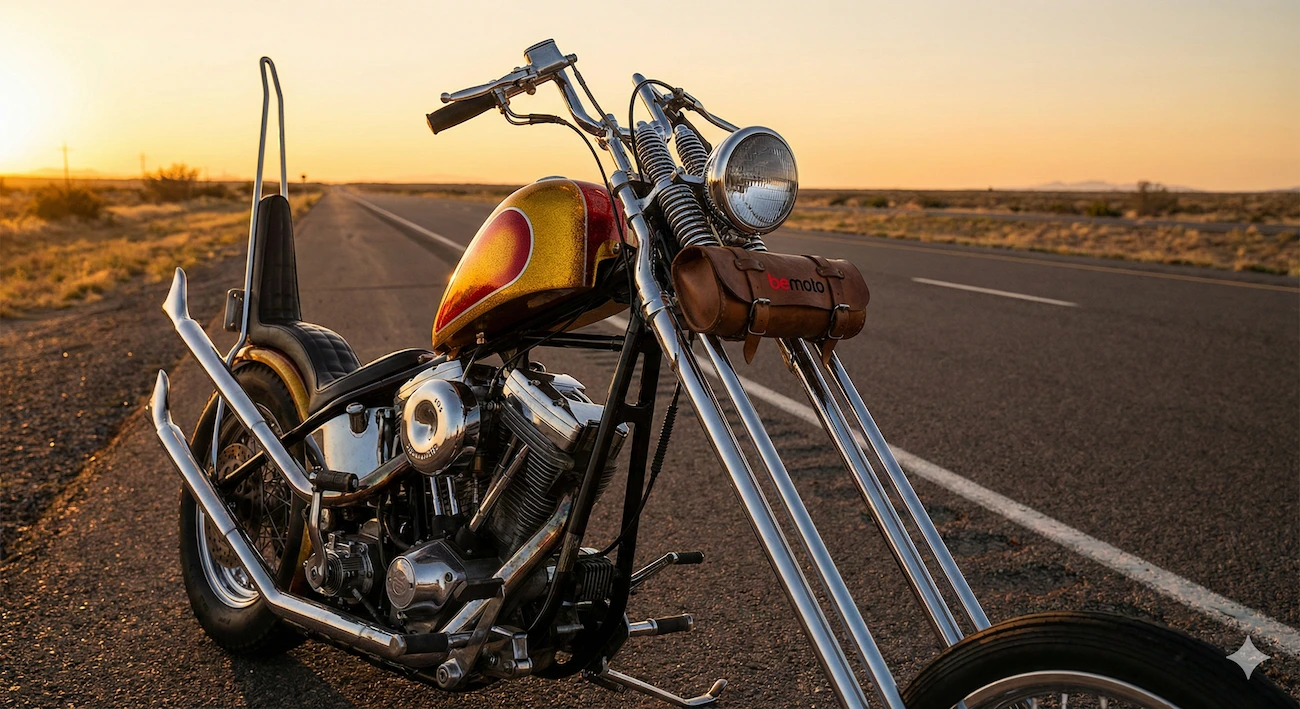
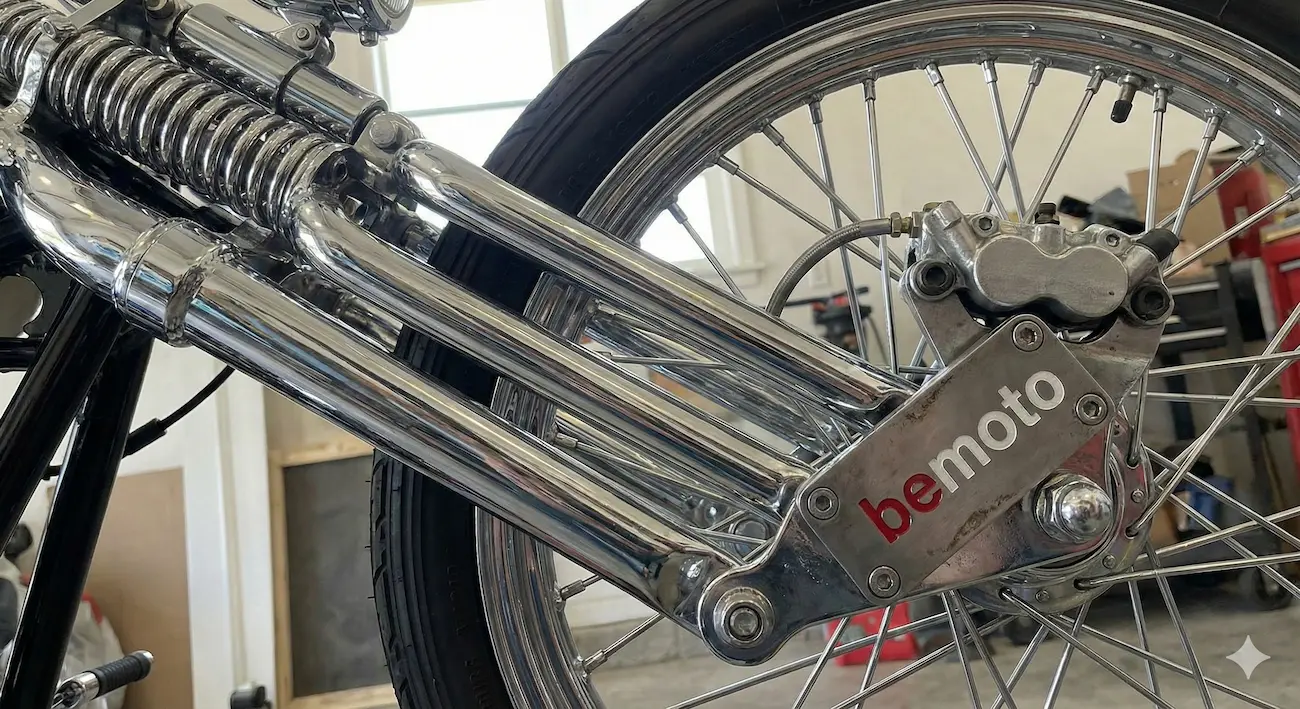
Builders in California started creating bikes that looked like nothing else on earth. They used "Springer" or "Girder" front ends because standard hydraulic forks looked too chunky. They fitted tiny "peanut" fuel tanks that held about a pint of petrol. They installed "sissy bars" on the back so their passenger didn't slide off onto the rear tyre.
Then came Easy Rider (yes, we mentioned it in the Cruiser blog, but it’s even more relevant here). The "Captain America" bike is the most famous chopper in history. It proved that you could ride a bike with zero rear suspension and 12-inch extended forks across a continent. (Although, if you ask Peter Fonda, he'd tell you it handled like a shopping trolley).
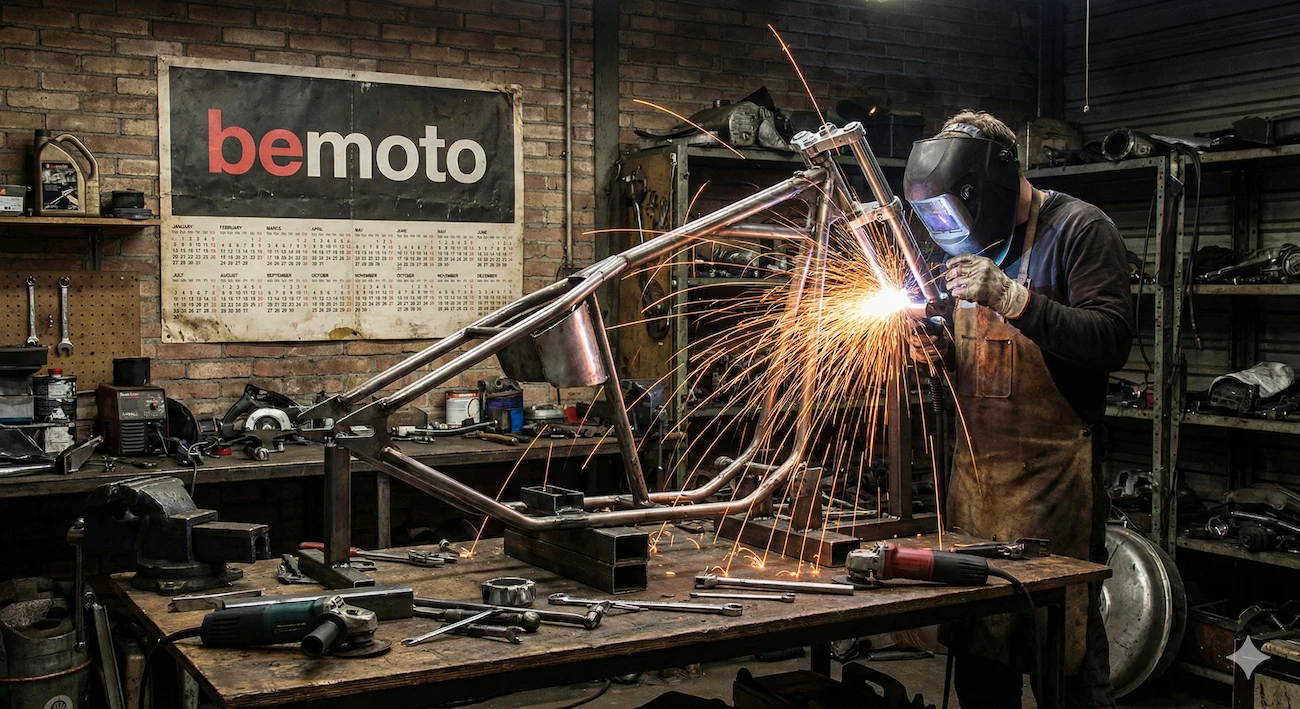
If you are riding a hardtail (no rear suspension), learn to read the road surface like a hawk. Your spine is now the suspension. If you see a pothole, lift your bum off the seat, or your chiropractor is going to become your new best friend.
3. The Geometry of Fear
Why do choppers handle weirdly? It’s physics. When you rake out the front end (kick the front wheel forward), you increase something called "trail".
A lot of trail means the bike wants to go in a straight line. It becomes very stable on the highway. However, when you try to turn a corner, the front wheel wants to "flop" over. At slow speeds, riding a long chopper is like wrestling a bear. You don't steer it; you suggest a direction and hope it agrees.
Add in the fact that many choppers have no front brake (to keep the wheel looking clean), and you have a recipe for focused riding.
4. The Dark Ages vs The Revival
Chopper history took a strange turn in the early 2000s. Reality TV shows like American Chopper made the style mainstream, but the bikes became ridiculous. Massive rear tyres (300 section), theme bikes covered in spider webs, and unrideable ergonomics. They were ornaments, not motorcycles.
Thankfully, the scene has corrected itself. The modern chopper scene is all about the "Frisco Style" or the 70s revival. Skinny tyres, lane-splitting narrow bars, and bikes that actually get ridden. Builders are hunting down original Harley Panhead and Shovelhead engines and building bikes that look like they rolled straight out of 1969.
Factory choppers also had a moment. The Honda Fury and Yamaha Raider brought the look to the showroom floor, offering the long-fork style with modern reliability and handling that didn't try to kill you at every roundabout.
5. Insuring the Uninsurable?
A lot of people think you can't insure a proper chopper. They think because you’ve cut the frame, it’s illegal. That’s not true, but you have to do it right.
If you are building a bike from scratch or radically altering the frame, it may need to pass an MSVA (Motorcycle Single Vehicle Approval) test to ensure it is roadworthy. Once it has that, it is legal.
At BeMoto, we specialise in the weird and wonderful.
- Agreed Value: If you have spent 500 hours welding a frame and painting a tank, the "market value" is irrelevant. We look at what it would cost to replace.
- Modifications: We need to know everything. Raked yoke? Extended forks? Sissy bar? Tell us. We speak the language.
Final thoughts
The chopper is the ultimate expression of individuality. It says, "I don't care about comfort, I don't care about cornering speed, I just want to ride something that is mine."
It is art with an engine. And while my back might complain about the hardtail life, my heart knows there is nothing cooler than a long front end pointing towards the horizon.
For the nitty-gritty on building your own bike and the MSVA test, check the government guidance on vehicle approval.