
UK Motorcycle Theft Statistics: The Hard Truth for Riders
There is a unique type of dread that every rider knows: walking back to the spot where you parked your bike, helmet in hand, only to find an empty patch of tarmac and a broken steering lock.
While motorcycle accident rates often dominate road safety campaigns, theft is a relentless, quiet epidemic running parallel to it. In the UK, keeping a hold of your machine is a constant battle against highly organised criminal networks and opportunistic thieves.
Recent crime analysis reveals that while national theft rates have experienced a minor downward trend since their historic 2022 peak, the numbers remain incredibly high. Regional hotspots are flaring up rapidly, and thieves are becoming bolder.
If you are researching UK motorcycle theft statistics to understand your own risk, look into your motorbike insurance options, or upgrade your security, the latest data paints a glaring picture. Here are the hard-hitting facts on motorcycle theft rates in the UK, backed by official industry and police data.
The UK Motorcycle Theft Rate: A Bike Vanishes Every 24 Minutes
The pure velocity of bike crime in Great Britain is staggering. Data tracked across national police networks and security groups shows that a powered two-wheeler (PTW)—which includes motorcycles, scooters, and mopeds—is reported stolen every 24 minutes on average.
This amounts to a UK motorcycle theft rate of roughly 60 units vanishing across the country every single day.
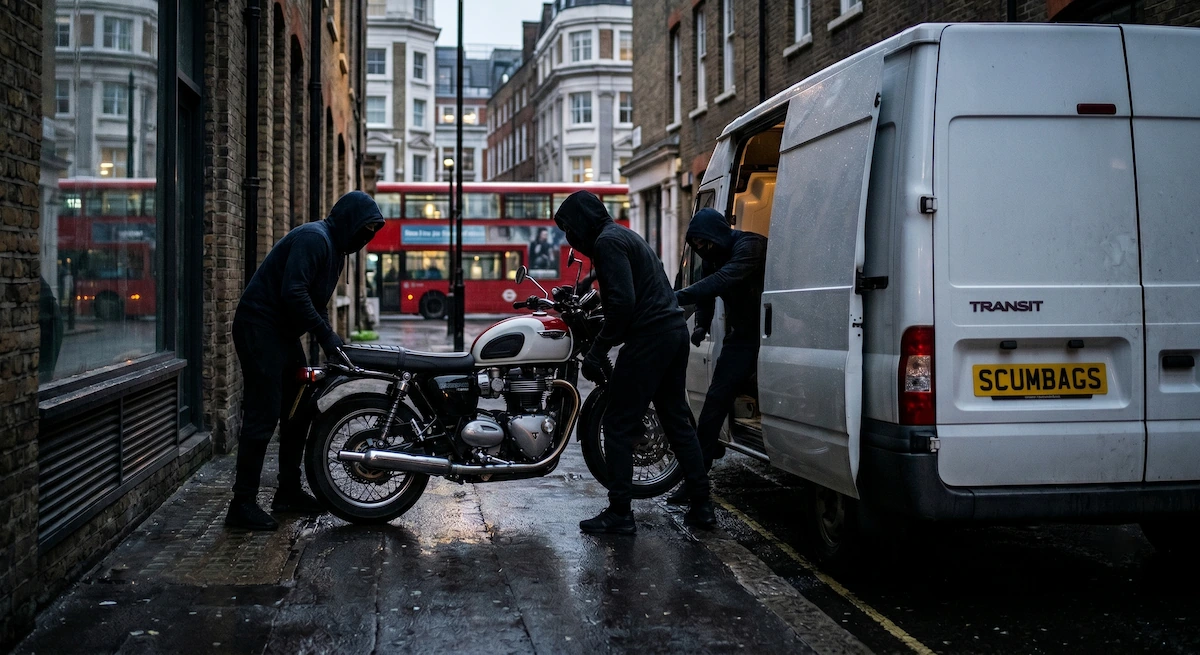
The speed of the actual crime is just as alarming. According to the National Criminal Intelligence Service (NCIS) and police tracking specialists, it takes an organised team less than 20 seconds to steal an unsecured motorcycle worth £10,000. The classic method is simple but effective: driving a transit van alongside the bike, shoving scaffolding poles through the wheels, and lifting it bodily into the back of the van.
UK Motorcycle Theft Hotspots: Where is the Risk Highest?
Motorcycle theft is not a problem that is evenly distributed across the UK; it is heavily concentrated in major urban areas and commuter hubs. When analyzing UK motorcycle theft hotspots, a few specific regions demand a massive amount of police resources.
The London Crisis
According to data analyzed by Bennetts BikeSocial, the Metropolitan Police area remains the undisputed motorcycle theft capital of the UK. The capital regularly logs over 500 stolen motorcycles and scooters every single month. Metropolitan Police data reveals that roughly 8.5 thefts occur for every 1,000 registered bikes in London, making it the highest-risk zone in the country.
The Regional Hotspots
It isn't just London. The latest monthly police intelligence briefs identify the West Midlands (averaging around 90–110 thefts a month), Greater Manchester, and West Yorkshire as the next most targeted areas.
The Safe Havens
Conversely, regions like Northern Ireland, North Wales, and Northern Scotland frequently record weeks at a time with zero reported motorcycle thefts.
Motorcycle Theft by Location: The Driveway Myth Debunked
One of the most dangerous mistakes a rider can make is assuming their bike is safe just because it is parked on private property. National tracking data and insurance indices from firms like BikeTrac and Visordown break down motorcycle theft by location and debunk this myth entirely. Their long-term theft location data shows a surprising split:
| Theft Location | Percentage |
|---|---|
| Public Streets | 23% |
| Personal Driveways / Gardens | 21% |
| Inside Locked Sheds / Garages | 18% |
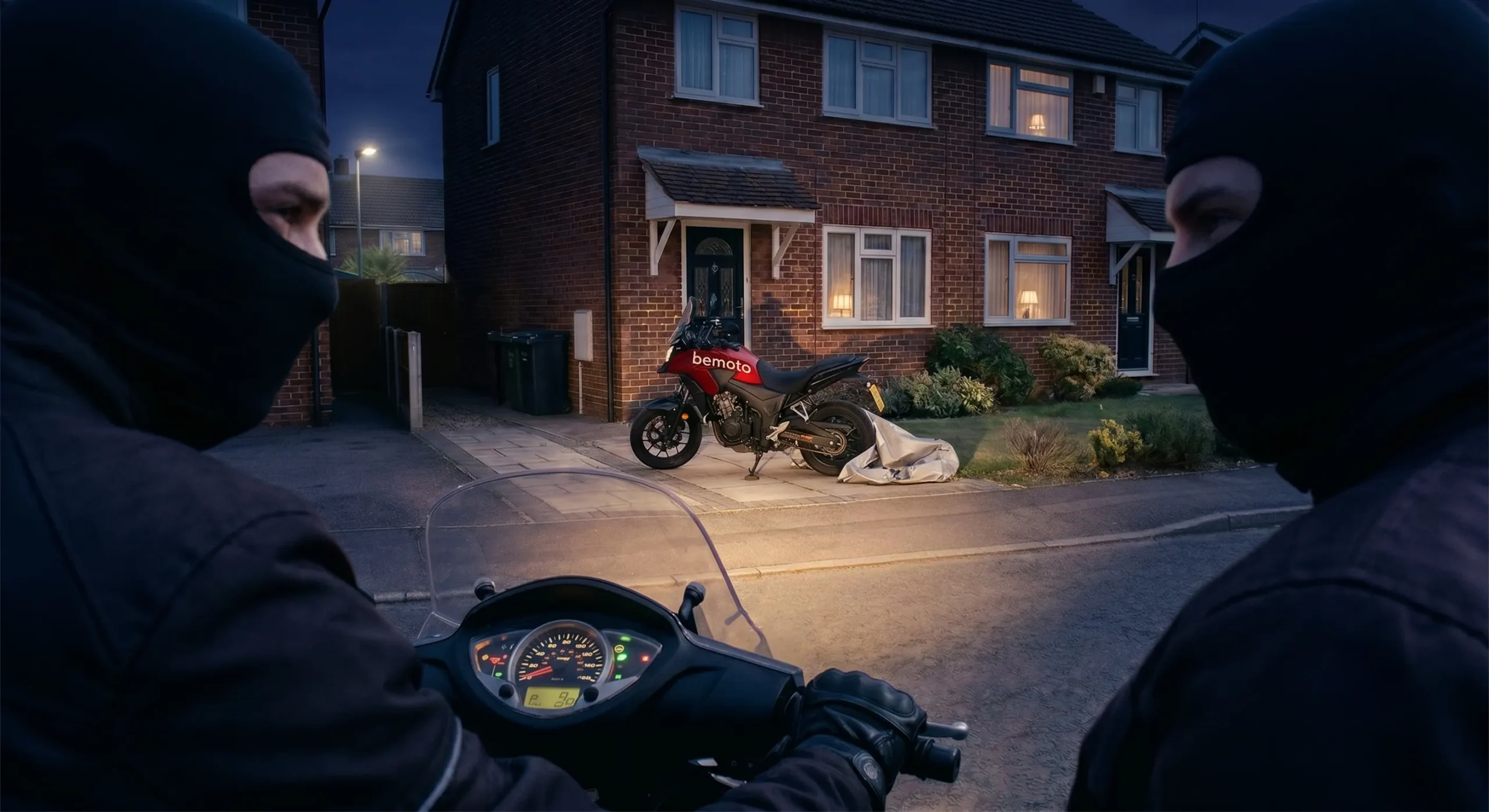
A combined 39% of all motorcycle thefts occur right at the owner's home address. Thieves frequently scout residential neighborhoods during the day, targeting bikes stored under cheap covers or behind flimsy garage doors, returning between the peak theft hours of midnight and 4:00 AM with battery-operated angle grinders.
Scooter Theft Trends: The Rise of Digital Crime and Underage Thieves
The demographics and motivations behind bike crime have fundamentally shifted over the last few years. It is no longer just about professional chop-shops stripping parts for the black market. There is a sharp divide between high-end motorcycle thefts and commuter scooter theft trends.
A recent national policing analysis revealed that more than 50% of those suspected of motorcycle and scooter theft in the UK were under the age of 18.
This rise in youth-driven theft is heavily tied to social media culture. Investigations by media outlets like the BBC have highlighted an ongoing trend where young, masked thieves record their thefts or joyrides, uploading the footage to platforms like TikTok and Instagram to openly boast about their crimes and mock both the victims and local police forces. Scooters and lightweight 125cc commuter bikes are highly targeted for this style of crime because their steering locks are incredibly easy to bypass.
How to Beat UK Motorcycle Theft Statistics: The Power of Layered Security
If these UK motorcycle theft statistics feel bleak, there is a silver lining. Thieves are primarily looking for easy, rapid targets. If you make your bike look like a time-consuming hassle, they will almost always move on to an easier target.
Furthermore, investing in a high-quality GPS tracker is proving vital to beating the odds. Recovery data from security firm BikeTrac indicates a recovery rate of over 90% for stolen vehicles fitted with an active tracking device, often leading police directly to the thieves' storage units within hours of the crime.
🛡️ The 1-in-1,000 Rule: Ready to Upgrade Your Bike's Defence Strategy?
Don't leave your pride and joy unprotected. Read our comprehensive guide on the top 10 motorbike security devices to find out which chains, anchors, and trackers the experts recommend to keep thieves at bay.