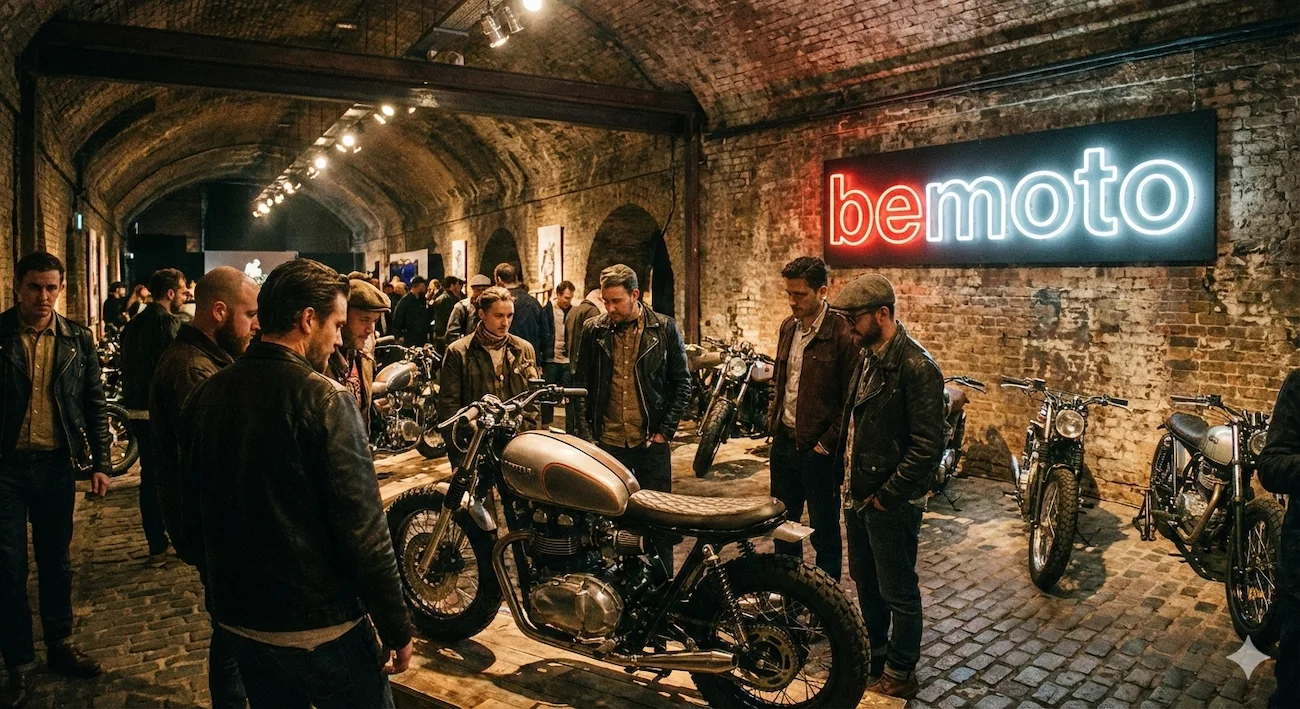

If you mention "cafe" to most people, they think of a flat white and a slice of carrot cake. If you mention it to a biker, they think of oil, leather, and doing 100mph on the North Circular. This is cafe racer history, and it is arguably the coolest era of them all.
Welcome to part three of "What the Fork?". We have covered the moped and the scooter. Now it is time for the main event. The bike that defined British youth culture in the 1950s and created a look that manufacturers are still copying 70 years later.
1. 1955: The Birth of Speed
Post-war Britain was greyer than a wet weekend in Skegness. But by the mid-50s, things were changing. The economy was picking up, teenagers had jobs, and for the first time, they had disposable income. They didn't want the sensible, plodding motorcycles their dads rode to work. They wanted excitement. They wanted rock 'n' roll.
This is where cafe racer history begins. The aim was simple: speed.
The goal was to "do the ton"—that's 100mph to you and me. It doesn't sound like much now when a modern family estate car can do 150mph, but in 1955, on a vibrating parallel twin with drum brakes and tyres made of wood, 100mph was terrifying.
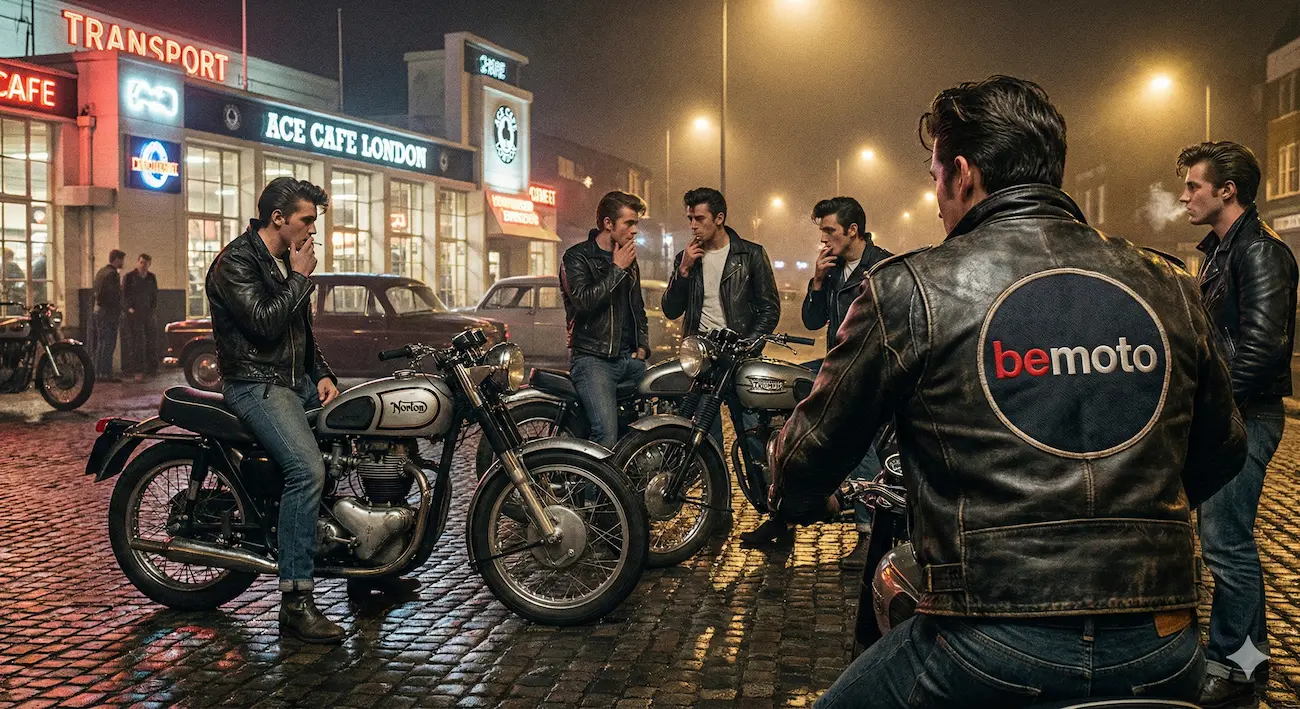
The hubs for this culture were the transport cafes. The Ace Cafe in London, the squalor of the Busy Bee in Watford, and Johnson's Cafe near Brands Hatch. Riders would put a record on the jukebox, race to a certain roundabout and back, and try to get there before the song finished. That is "record racing".
Building a Custom?
Whether it's a shed-built Triton or a modified Thruxton, we love a custom build.
Get a Classic Quote2. The Bikes: Built, Not Bought
The problem for the "Ton Up Boys" was that the bikes you could buy in the showroom weren't fast enough. Or if they were fast, they handled like a shopping trolley.
So, they improvised. They stripped everything off. If it didn't make the bike go faster or stop better, it went in the bin. Mirrors? Gone. Pillian footpegs? Gone. Heavy mudguards? Replaced with alloy.
Then came the clip-ons (low handlebars) and rear-set footrests. This forced the rider into a racing crouch, reducing wind resistance and making you look like Geoff Duke at the Isle of Man TT.
But the ultimate expression of cafe racer history was the hybrid. The engines from Triumph were powerful and reliable, but their frames wobbled at speed. Norton frames (the famous "Featherbed") handled beautifully, but their engines were a bit agricultural.
The solution? Put the Triumph engine in the Norton frame. The **Triton** was born.
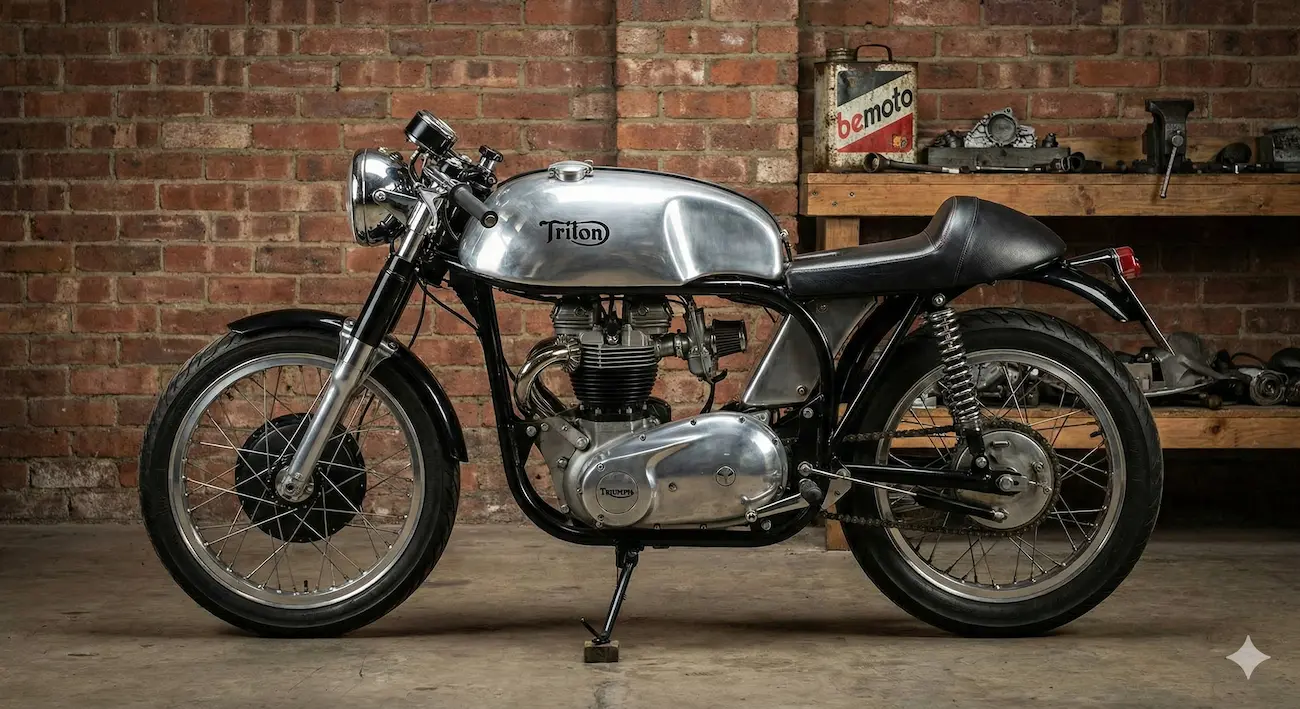
Thinking of buying a classic Triton? Check the engine mounts carefully. These were homemade conversions, and the quality of the engineering varies from "aerospace precision" to "Dave had a go with a welder in his shed".
There were others too:
- Tribsa: Triumph engine in a BSA frame.
- Norvin: The holy grail. A Vincent V-Twin engine in a Norton frame. If you own one of these, I'd like to be your friend.
3. The Look: Leather and Grease
You couldn't ride these bikes in a tweed jacket. It was cold, wet, and dangerous. The uniform of the cafe racer was born out of necessity.
Thick black leather jackets (often with the collar turned up), heavy boots, and white silk scarves. The scarf wasn't for show; it stopped the wind from chafing your neck raw when you were tucked in at 90mph.
They were rebels. The press hated them. They were noisy, greasy, and hung around in cafes drinking tea and playing loud music. In reality, most of them were apprentices or mechanics who just loved machinery, but the "bad boy" image stuck.
4. The Modern Revival
The original cafe racer scene died out in the late 60s as Japanese bikes arrived and cars became cheaper. But you can't kill cool.
In the last decade, we have seen a massive resurgence in cafe racer history. It started with shed-builders chopping up old Honda CB750s and BMW R80s. Then the big manufacturers realised there was money to be made.
Now you can walk into a showroom and buy a factory-built cafe racer that starts on the button and doesn't leak oil.
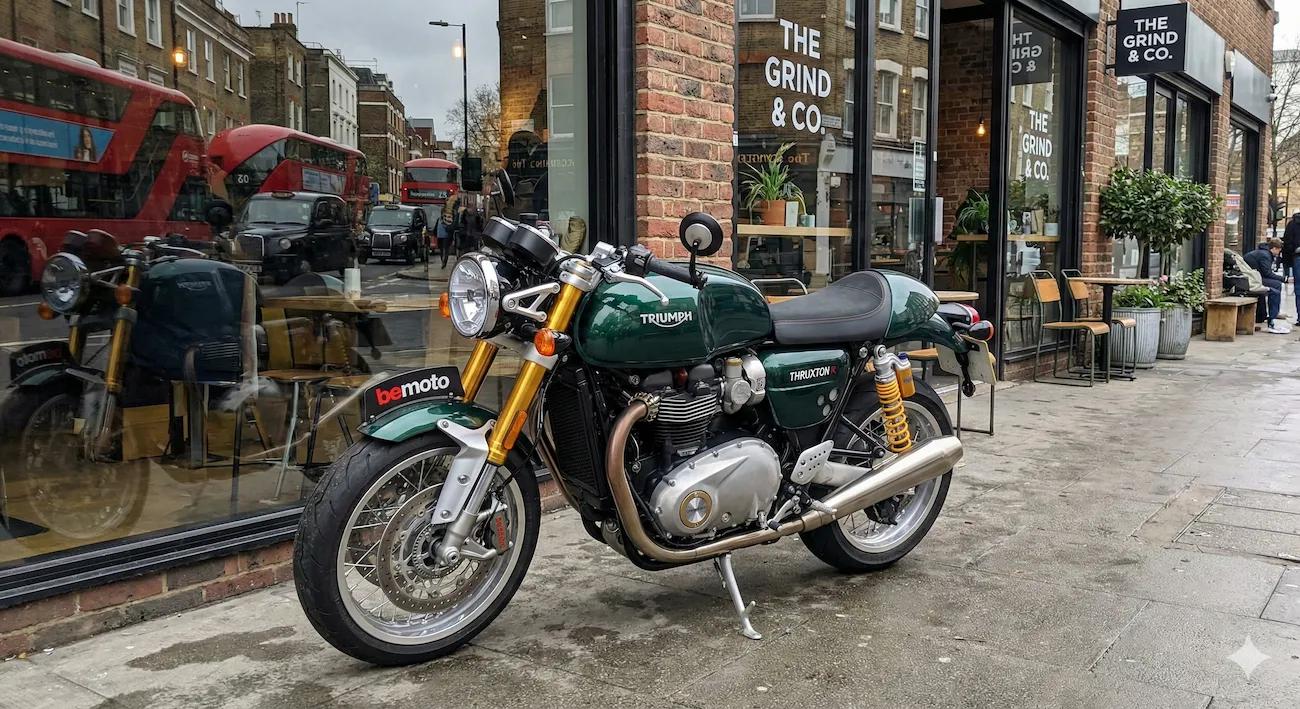
- Triumph Thruxton: arguably the king of the modern retros.
- BMW R nineT Racer: German engineering with 70s style.
- Royal Enfield Continental GT: Authentic looks for a bargain price.
Some old-school riders say it's cheating to buy a ready-made cafe racer. I say, if it gets you on two wheels and puts a smile on your face, who cares?
5. Insuring a Legend
This is where things get tricky. Insurance for cafe racers depends entirely on what you have.
If you have a modern retro (like a Thruxton), it is standard bike insurance. Easy.
If you have a home-built custom, it is a modified bike. We need to know what you've done. Have you cut the subframe? Changed the forks? Tuned the engine? We love mods at BeMoto, but we need the details to cover you properly.
If you have a genuine classic Triton from the 1960s, that is a piece of history. It needs an agreed value policy. You don't want a payout for an "old motorbike" if it gets nicked; you want the value of your specific machine.
Final thoughts
The cafe racer is more than just a style of bike. It is an attitude. It represents a time when we stopped just using bikes to get to work and started using them to feel alive.
Whether you are wrestling a 1959 Triton around a roundabout or cruising to a coffee shop on a modern retro, you are keeping the spirit of the Ton Up Boys alive. Just maybe watch out for the speed cameras; they are a bit more accurate than they were in 1955.
For more on the legalities of modifying your bike, check the government rules on radically altered vehicles.