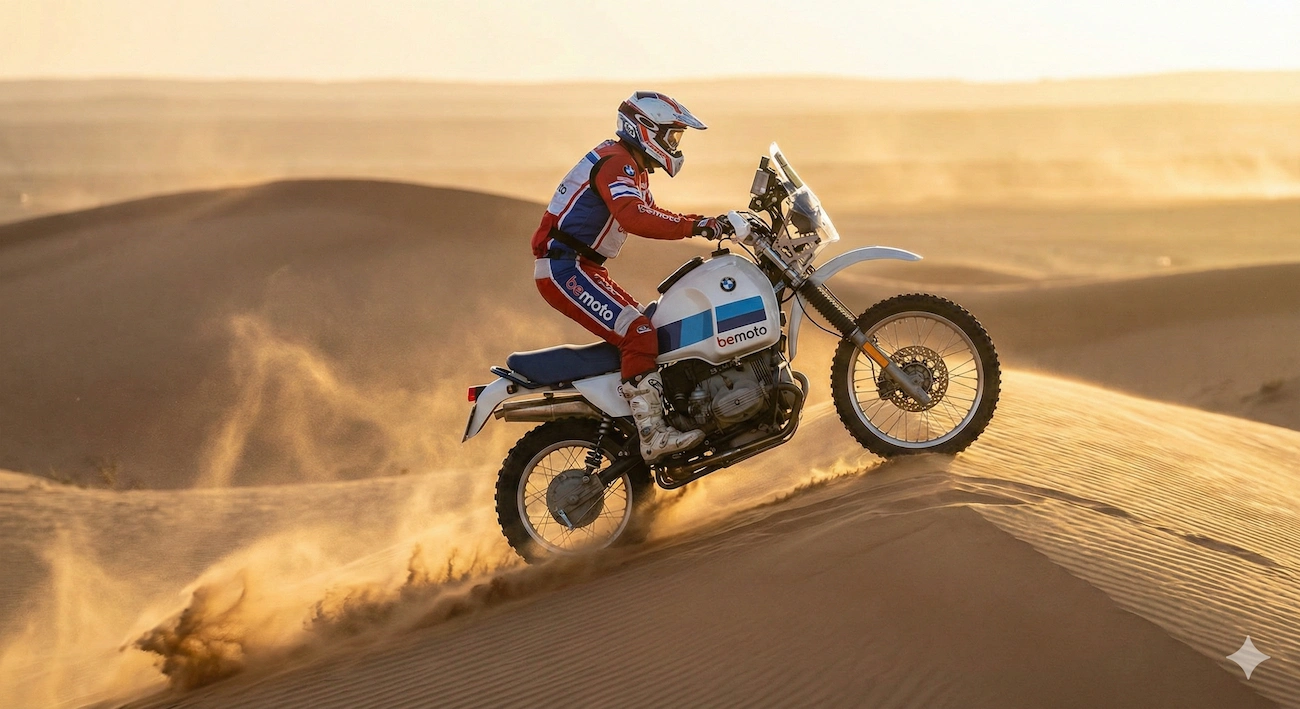

We have looked at bikes built for speed, style, and comfort. Now, we are looking at bikes built for punishment. Welcome to part eight of "What the Fork?", where we explore the world of dirt bike history.
Road riding is about precision and flow. Dirt riding is about wrestling a mechanical kangaroo through a swamp while trying not to hit a tree. It is physically exhausting, frequently messy, and arguably the most fun you can have with your clothes on.
1. What Exactly is a Dirt Bike?
To the uninitiated, they all look the same: tall, plastic, and noisy. But a dirt bike is a purpose-built tool.
Unlike the "Scramblers" we discussed in a previous blog—which were modified road bikes—a proper dirt bike is designed from the ground up for terrain that would snap a cafe racer in half. They have long-travel suspension (to soak up 20-foot jumps or massive rocks), lightweight frames, and engines tuned for instant torque rather than top speed.
If you ride one on the road, it feels vibrate-y, twitchy, and uncomfortable. If you ride one in the mud, it makes perfect sense.
2. From Scrambles to Motocross
Dirt bike history really kicks a gear in the late 60s and early 70s. Before this, riders were struggling with heavy British four-strokes. Then, the Japanese manufacturers arrived with a two-stroke revelation.
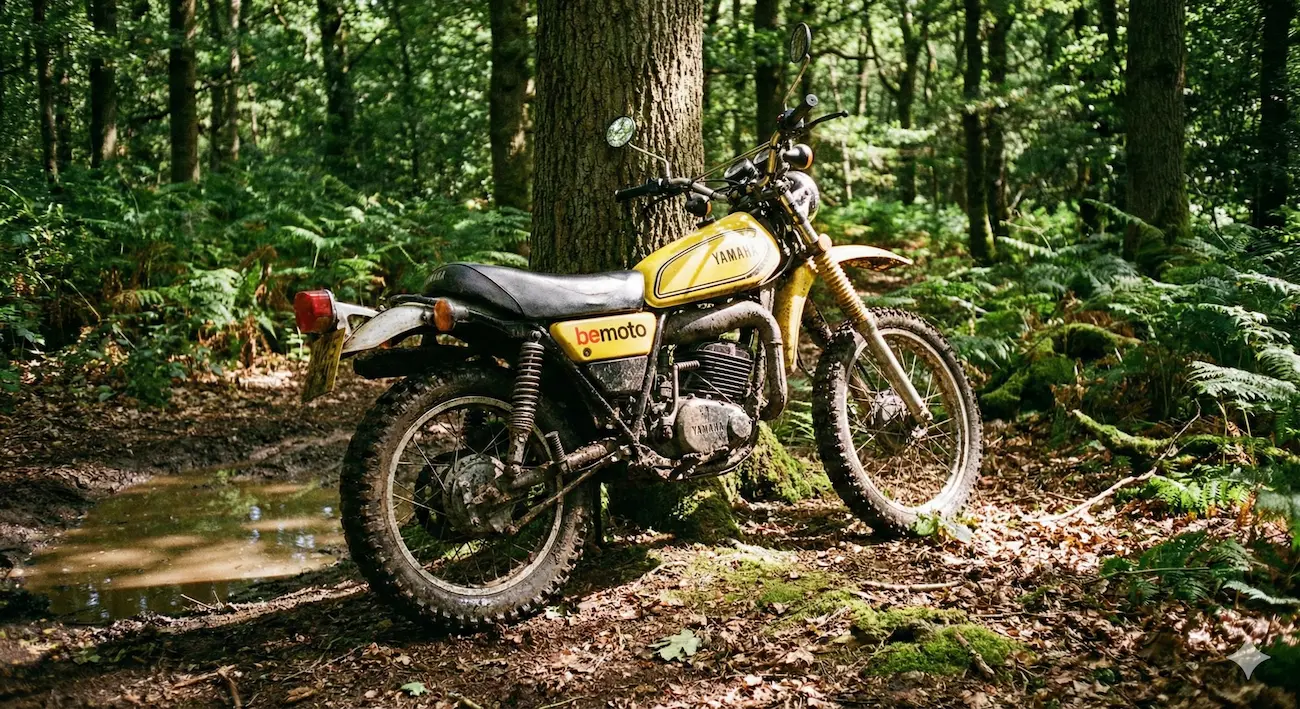
Bikes like the Yamaha DT-1 changed everything. They were light, reliable, and affordable. Suddenly, you didn't need to be a mechanic or a bodybuilder to ride off-road.
This era split the off-road world into specific disciplines. You couldn't just have "a dirt bike" anymore. You had to choose your weapon.
Broken a Bone?
Off-road riding is risky business. Make sure you have cover that protects YOU, not just the bike.
Get Personal Injury Cover3. Know Your Knobbies: The Family Tree
If you walk into a dealership today, you will be faced with a confusing array of acronyms. Here is the Spanners guide to what’s what:
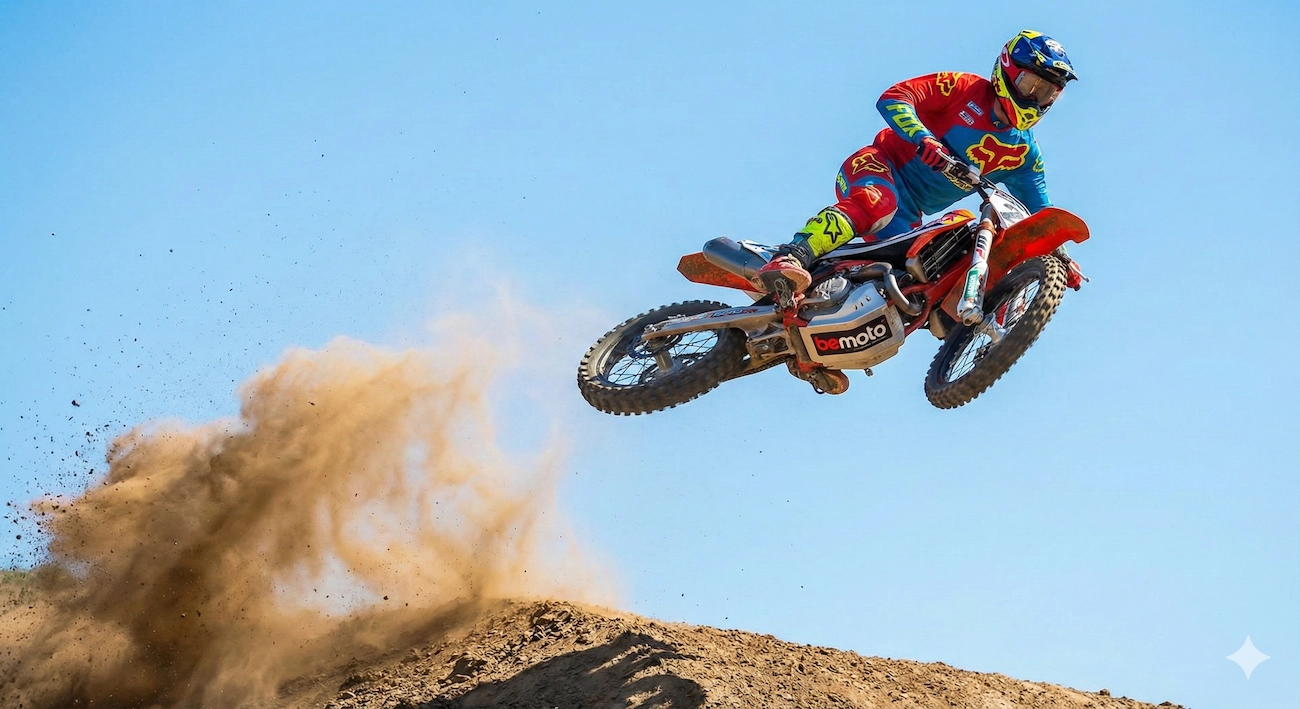
- Motocross (MX): These are race bikes. Stiff suspension, explosive power, close-ratio gearboxes. They have no lights, no number plates, and no electric start (usually). They are designed for closed circuits with jumps. Do not buy one for green laning; you will hate it.
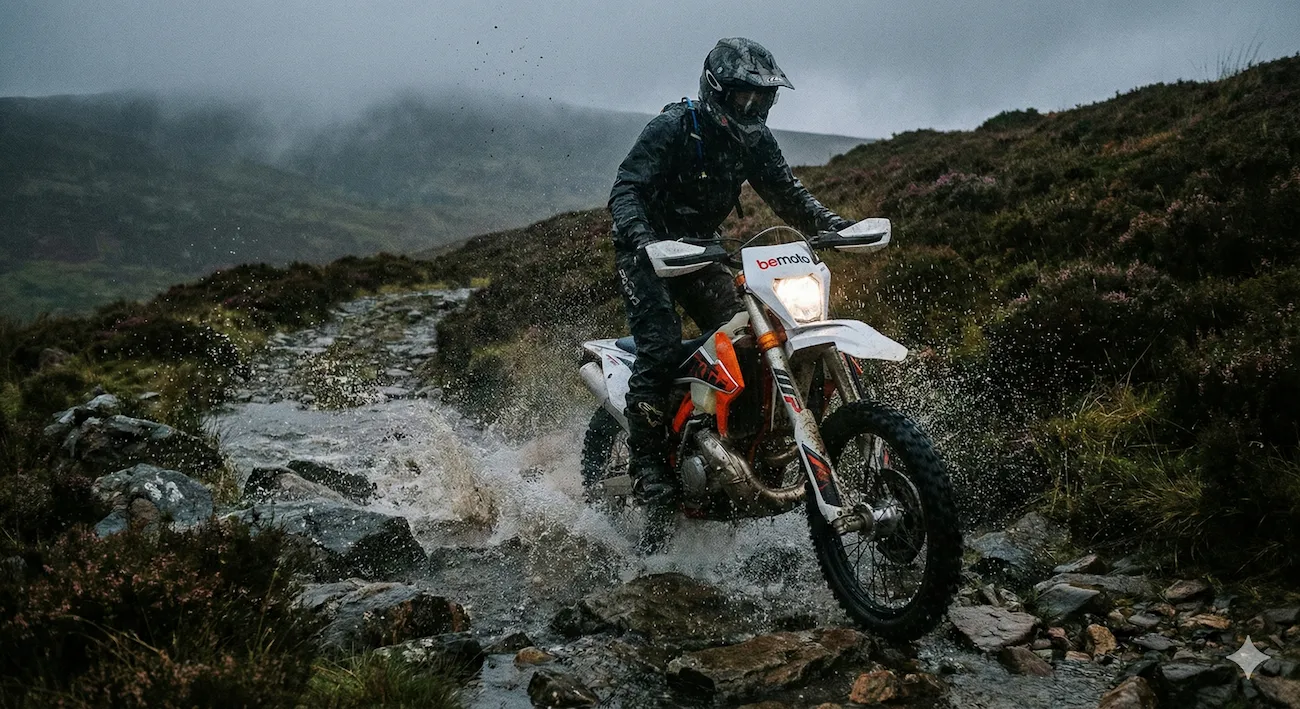
- Enduro: The polite cousin of the MX bike. They look similar but have softer suspension, wider gear ratios, lights, and are usually road-legal. They are designed for long-distance off-road riding, woods, and technical trails.
- Trials: The weird ones. No seat, tiny tank, and super light. Designed for hopping over rocks and logs at walking pace. It's basically motorcycle ballet.
- Trail/Dual Sport: The Honda CRF300L or the old Suzuki DRZ400. Soft, heavy, and reliable. Good on the road, capable enough on the dirt. The "SUV" of the bike world.
If you are getting into off-road riding, learn to stand up. Sitting down is for the road. Standing up lowers the centre of gravity (counter-intuitively, because your weight goes through the pegs, not the seat) and lets your legs act as extra suspension. Plus, it stops your backside getting bruised.

4. The Great Debate: 2-Stroke vs 4-Stroke
You cannot discuss dirt bike history without mentioning the engine war.
For decades, the 2-stroke was king. They were light, simple to fix with a hammer, and produced a power band that was terrifyingly addictive. The smell of castor oil is still the best perfume known to man.
However, emission laws and the need for tractable power brought the 4-stroke to the front. Modern 4-strokes are engineering marvels. They find grip where a 2-stroke would just spin up and throw you into a hedge.
But the 2-stroke isn't dead. In the "Hard Enduro" world (riding up vertical cliffs), the 2-stroke is still the weapon of choice because they don't overheat as easily and are harder to stall.
5. Where Can You Ride?
This is the big one. In the UK, you cannot just ride anywhere.
- Motocross Tracks: Private land, pay and play. You need a van or trailer to get there.
- Green Lanes (Byways): These are legal roads that just happen to be un-surfaced. You must be road legal (tax, MOT, insurance, number plate).
Riding illegally on footpaths or in local woods gives all of us a bad name. It gets lanes closed and gets bikes crushed. Don't be that guy. If you want to find legal routes, join the Trail Riders Fellowship (TRF). They fight to keep rights of way open and can show you where the good stuff is.
Final thoughts
Dirt bike history is a story of evolution. We went from heavy road bikes to lightweight 2-strokes, to high-tech 4-strokes. But the core appeal remains the same.
It’s about escaping the traffic, mastering machine control in low-grip situations, and coming home covered in mud with a massive grin on your face. Just remember, the washing machine cycle for your gear takes longer than the actual ride.