
If you think a 50-mile Sunday blast to the cafe is a "long ride", you might want to look away now. This one is for the iron butts. The mile munchers. The people who think crossing a continent is a reasonable way to spend a weekend.
Welcome to part nine of "What the Fork?", where we are loading up the panniers and exploring touring bike history.
Touring is the art of covering distance. It’s about comfort, capacity, and the ability to ride through three different weather systems in a single day without wanting to cry. But it wasn't always heated seats and cruise control.
1. What Defines a Touring Bike?
Technically, you can tour on anything. People have ridden around the world on Honda C90s and Yamaha R1s. But a proper touring bike makes the job easy.
The key ingredients are:
- Weather Protection: A big screen and fairing to stop the wind trying to rip your head off for six hours straight.
- Luggage: Hard panniers and a top box. Because bungee-cording a bin bag to your pillion seat gets old fast.
- Comfort: A seat that feels like an armchair, relaxed ergonomics, and a big fuel tank so you aren't stopping every 100 miles.
2. The Early Days: The Hard Way
In the early days of touring bike history, "touring" just meant "riding a long way on a bike that vibrated your fillings out".
Bikes like the Brough Superior SS100 were the grand tourers of the 1920s and 30s. They were fast, expensive, and capable of big miles (if you were a good mechanic). But for most riders, touring meant throwing a canvas bag over the back of a Triumph or Norton and hoping it didn't rain. There were no fairings, no heated grips, and definitely no GPS. You navigated by landmarks and paper maps that dissolved as soon as it drizzled.
3. The Gold Wing Changed Everything
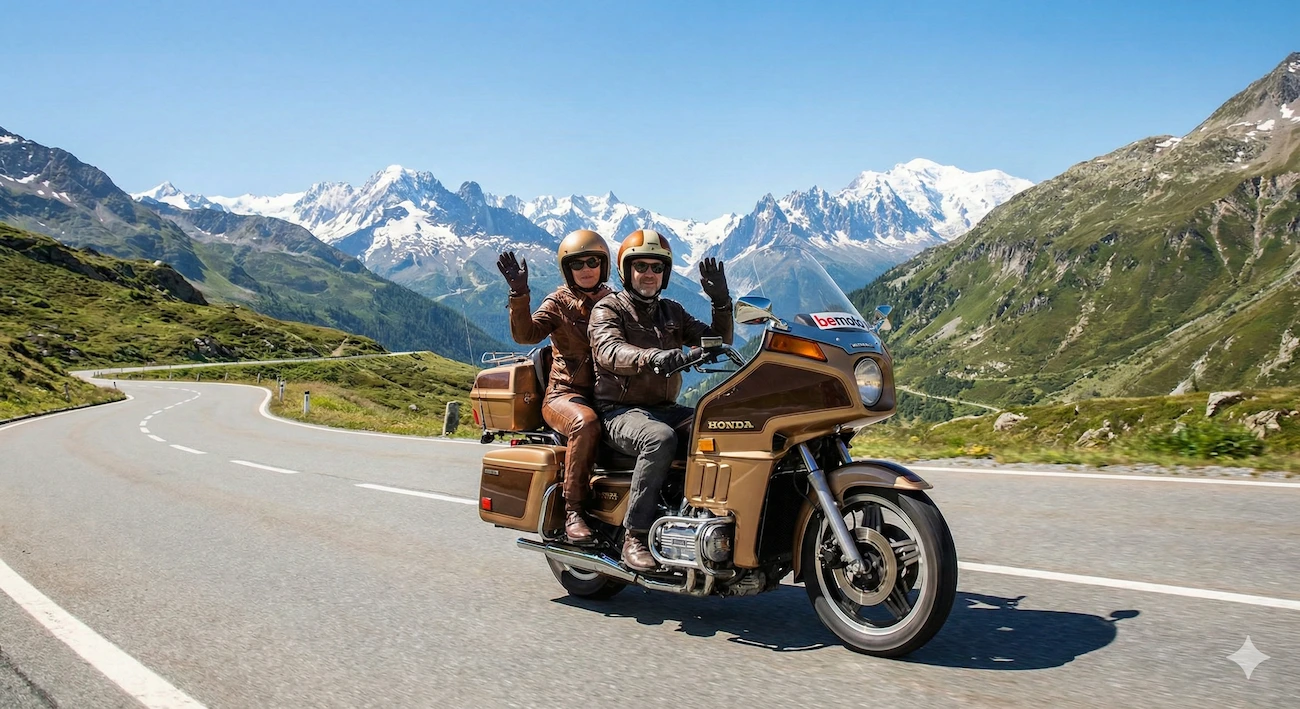
If there is one bike that defines touring bike history, it is the Honda Gold Wing.
Launched in 1975 as the GL1000, it was a naked bike with a smooth flat-four engine. But riders started fitting aftermarket fairings and panniers. Honda noticed. By 1980, they released the GL1100 Interstate, the first factory-built tourer with a full fairing and luggage.
Suddenly, you could listen to the radio while riding. You had air suspension. Later models added reverse gears, airbags, and cup holders. It wasn't just a bike anymore; it was a two-wheeled car. It proved that you could cover 500 miles in a day and still be able to walk when you got off.
Planning a Trip?
Don't let a breakdown or a border crossing ruin your tour. Get cover that travels with you.
Get Travel Insurance Quote4. The Sports Tourer: Speed with Luggage
Not everyone wanted a barge like the Gold Wing or the Harley Electra Glide. Some people wanted to get to the south of France in record time.
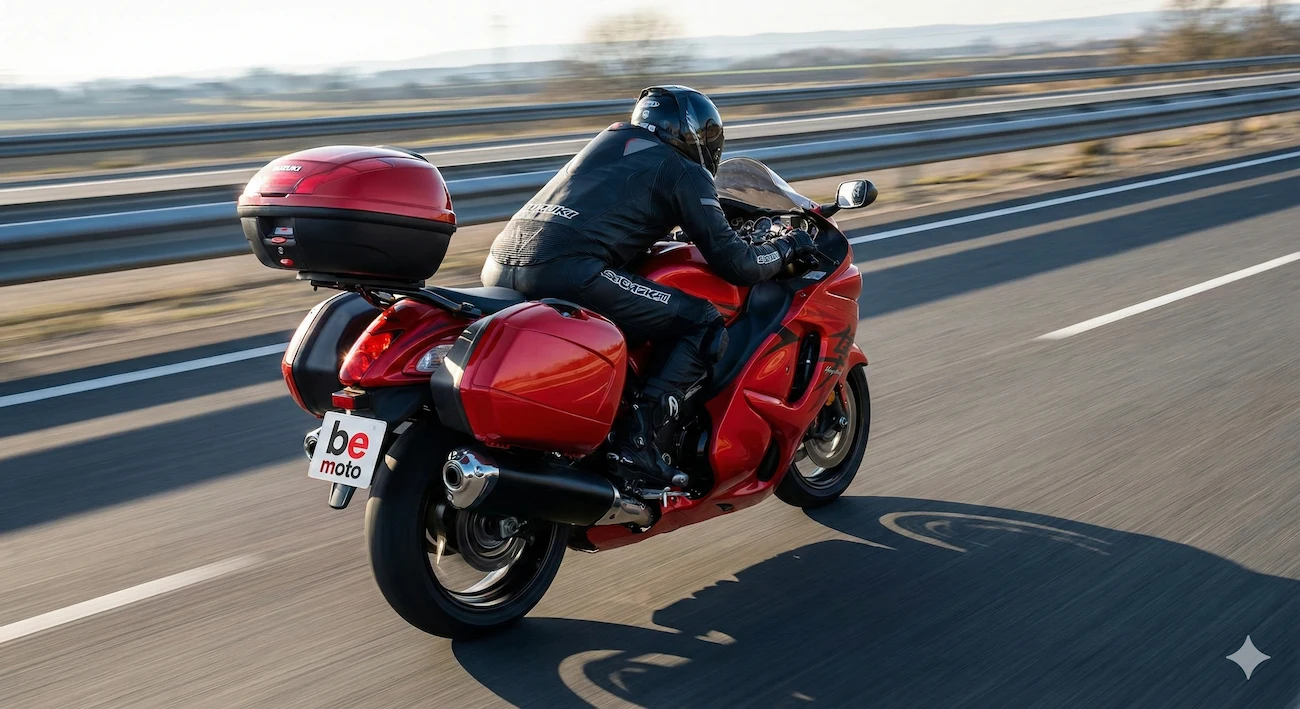
Enter the Sports Tourer. This segment exploded in the 90s. Bikes like the Honda VFR750 (and later the 800), the Triumph Sprint ST, and the legendary Honda Blackbird.
These bikes bridged the gap. They had clip-on handlebars and decent lean angles for the twisties, but they also had comfy seats and hard luggage capability. You could keep up with your mates on sports bikes in the mountains, but carry a week's worth of clothes and a bottle of wine in your panniers.
When packing panniers, keep the heavy stuff (tools, liquids) low down and balanced evenly between left and right. If you put all your heavy gear in a top box, it raises the centre of gravity and makes the bike handle like a shopping trolley with a wonky wheel.

5. The "Long Way Round" Effect
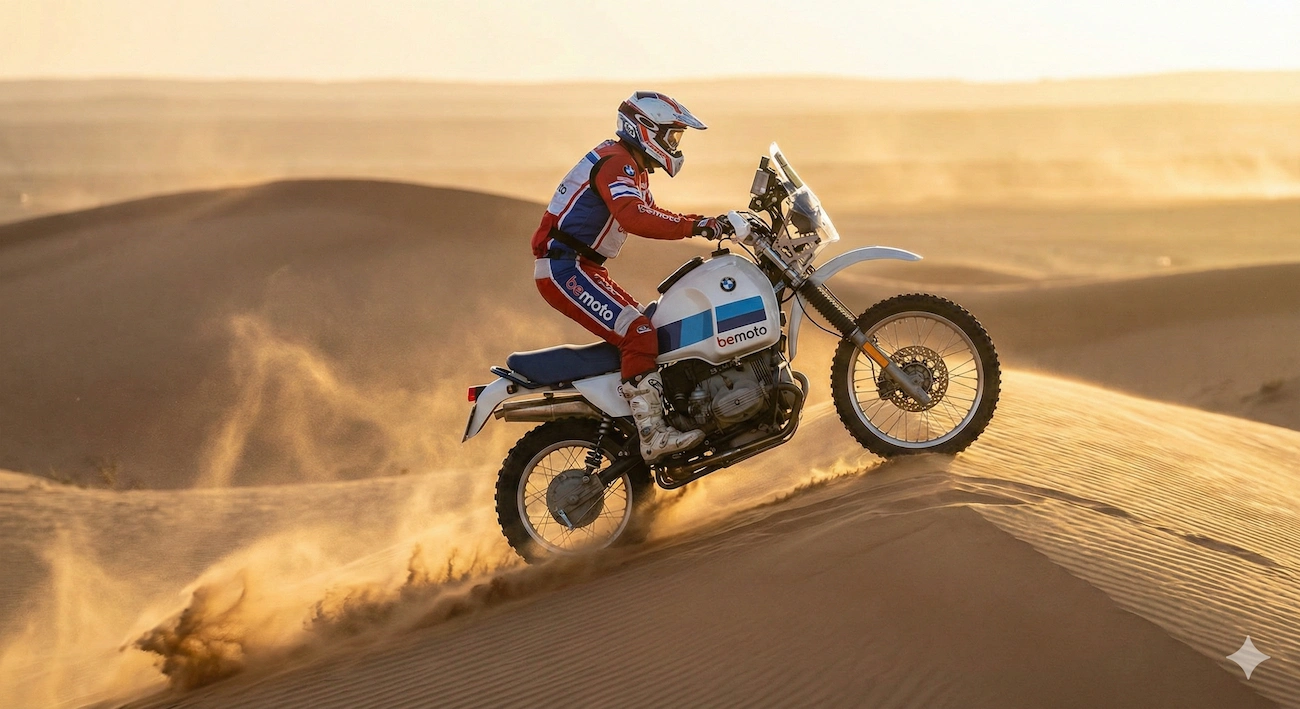
In 2004, Ewan McGregor and Charley Boorman rode BMW GSs around the world. Touring bike history shifted overnight.
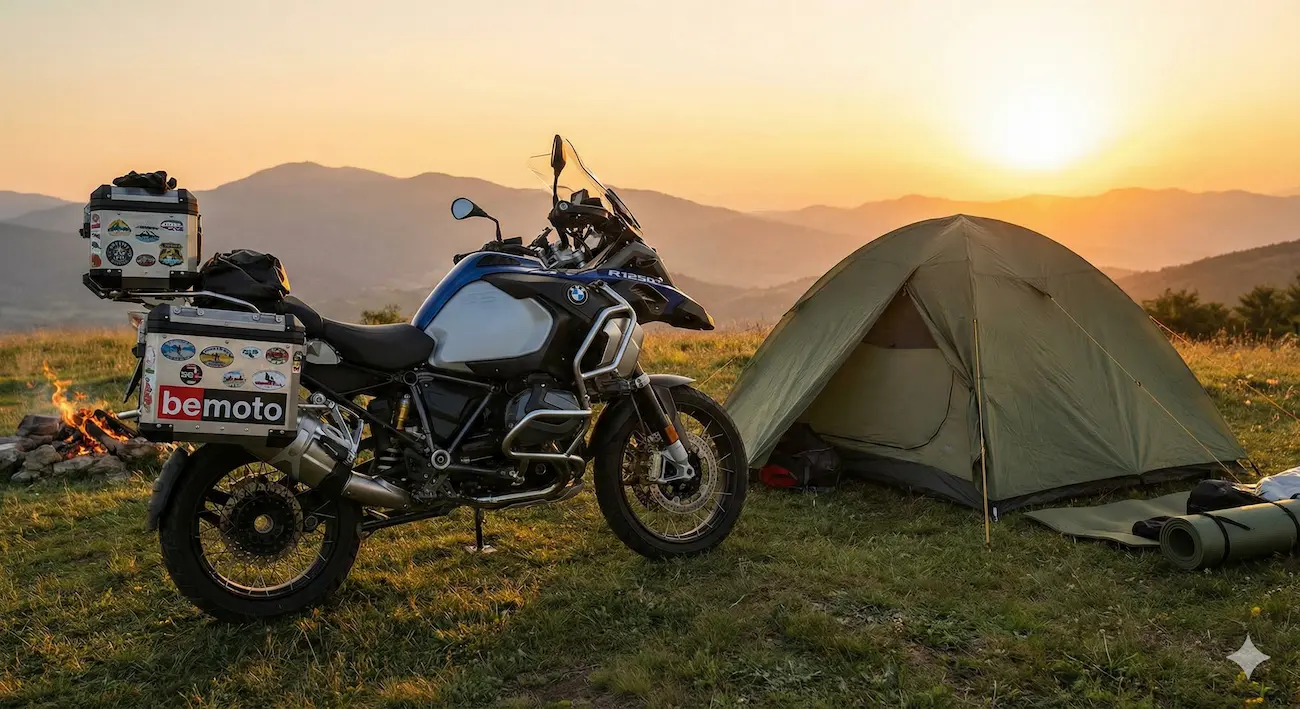
Suddenly, nobody wanted a traditional tourer. Everyone wanted an "Adventure Bike". The BMW R1200GS became the best-selling big bike in the world. It offered the comfort of a tourer but with a rugged, "I might ride across a desert later" image (even if most of them never saw dirt).
The Adventure Tourer is now the king of the road. With upright riding positions, massive aluminium luggage, and suspension that eats up potholes, they are arguably the best touring bikes ever made.
6. Modern Tech: The Space Age
Today, high-end tourers are technological marvels. We have:
- Electronic Suspension: Changes the ride height and damping at the push of a button depending on how much luggage you have.
- Radar Cruise Control: The bike automatically keeps a safe distance from the car in front.
- TFT Screens: Massive dashboards that connect to your phone for maps and music.
It’s a long way from a paper map stuffed down the front of your jacket.
Final thoughts
Touring bike history is about the human desire to see what is over the next hill. It doesn't matter if you are on a £25,000 Ducati Multistrada or a £2,000 Suzuki Bandit; the feeling is the same.
It’s about freedom. It’s about the smell of the air changing as you cross a border. It’s about eating questionable petrol station sandwiches in the rain. And honestly? I wouldn't have it any other way.
If you are planning a trip abroad, make sure you check the latest requirements for riding overseas.