
Go to any bike meet in the UK, from Box Hill to Matlock Bath, and count the bikes. I guarantee that 50% of them will be tall, beak-nosed machines with aluminium boxes the size of microwaves strapped to the sides.
The Adventure Bike (or ADV) has taken over the world. It is the SUV of the bike market. But how did we get here? How did a niche desert racer become the default choice for the middle-aged commuter?
Welcome to part ten of "What the Fork?", where we explore adventure bike history.
1. What is an Adventure Bike?
Before we look at the timeline, let's define the beast. An adventure bike is the "Swiss Army Knife" of motorcycles. It is designed to be:
- A Tourer: Comfy seat, wind protection, luggage capacity.
- A Trail Bike: Long travel suspension, wide bars, ground clearance.
- A Sport Bike: (Well, some of them). Powerful engines and decent brakes.
It promises the dream that you could turn left off the M1 and ride all the way to Mongolia, even if the furthest you actually go is the local Tesco Express.
2. The Big Bang: The Paris-Dakar Effect
Adventure bike history has a definitive starting point: The Paris-Dakar Rally.
In the late 70s, a crazy Frenchman named Thierry Sabine got lost in the Libyan desert and thought, "This would be a great place for a race." The rally captured the world's imagination. Manufacturers realised they needed bikes that could survive thousands of miles of brutal desert terrain at high speed.
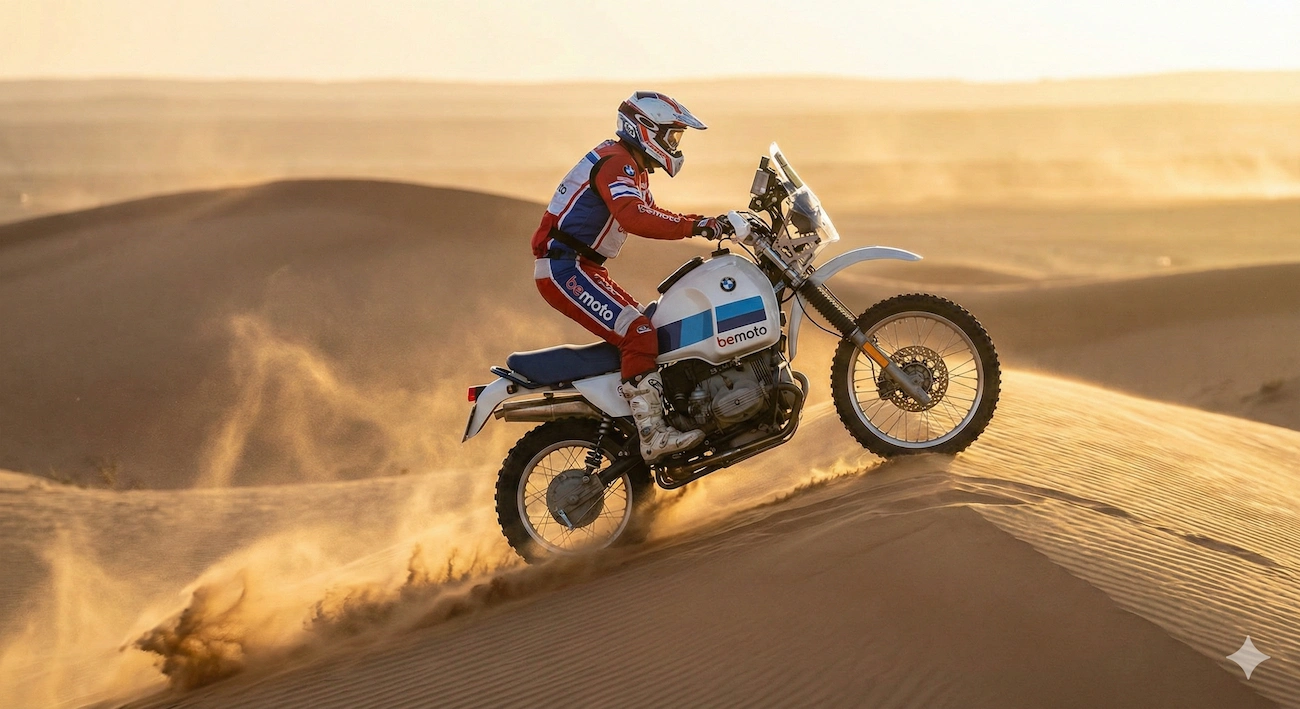
Yamaha gave us the XT500, a simple, rugged thumper. But in 1980, BMW dropped a bombshell: The R80G/S (Gelände/Straße - Off-road/Road).
It was huge, heavy, and had a boxer engine sticking out the sides. Purists laughed. Then Hubert Auriol won the Dakar on it. The G/S proved that a big, multi-cylinder bike could handle the dirt. The class was born.
Going the Distance?
Planning a European tour or a round-the-world trip? Make sure your insurance travels with you.
Get Adventure Travel Cover3. The Golden Era: Africa Twins and Super Teneres
The late 80s and 90s were the glory days of the "Dakar Replica". If you watched the rally on TV, you wanted the bike.
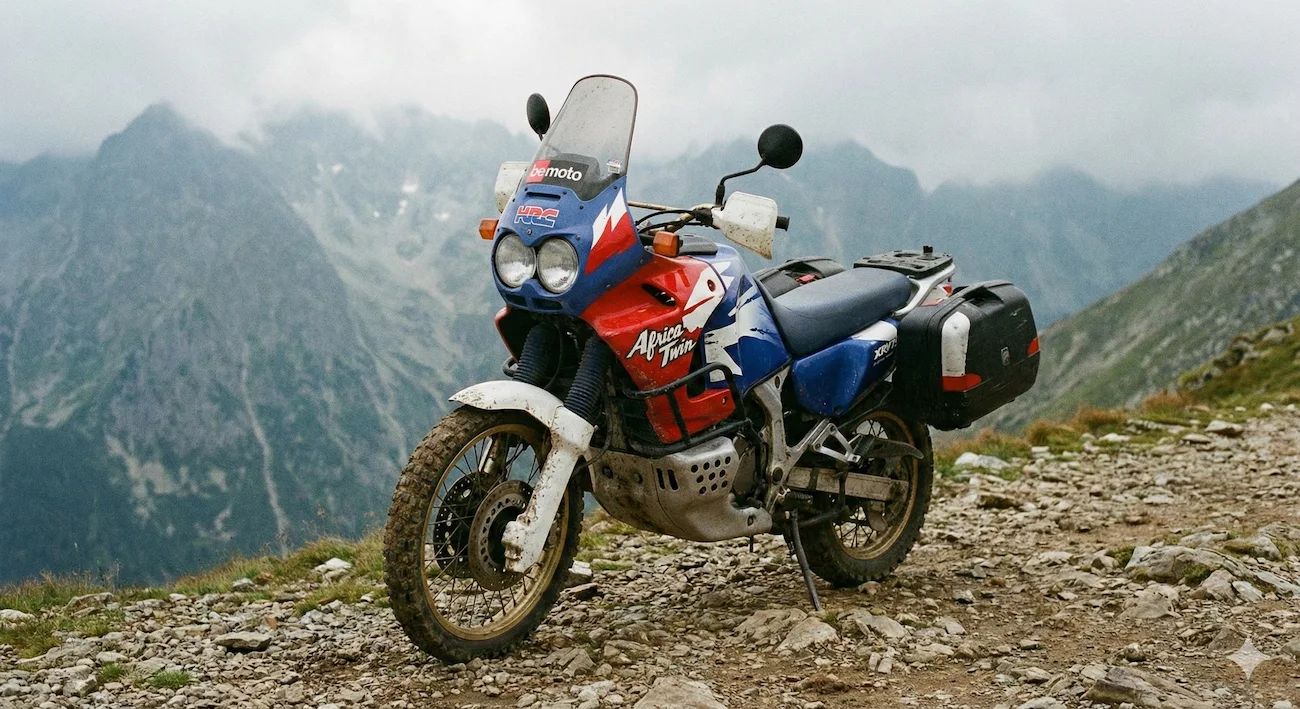
Honda gave us the XRV650 (later 750) Africa Twin. Yamaha launched the Super Tenere. Cagiva had the Elefant. These bikes were rugged, simple, and looked incredible in their rally liveries. They were built to be dropped, fixed with a hammer, and ridden forever.
They weren't fast by today's standards, but they had soul. This is why a clean 1990s Africa Twin now costs more than some new bikes.
Thinking of taking your shiny new 1250GS off-road? Be honest about your ability. A 250kg bike in deep mud is essentially a building falling over. If you want to learn green laning, buy a cheap, light 250cc trail bike first. Your wallet (and your spine) will thank you.
4. The "Long Way Round" Effect
We can't talk about adventure bike history without mentioning 2004. Two actors, Ewan McGregor and Charley Boorman, decided to ride around the world. They chose the BMW R1150GS Adventure.
The TV series Long Way Round changed motorcycling forever. Suddenly, sports bike sales tanked. Everyone swapped their leather onesies for Gore-Tex suits. The BMW GS became the best-selling bike in the UK (and huge chunks of the world).
It shifted the image of biking from "speed" to "experience". It wasn't about how fast you could get to the cafe; it was about how far you could go.
5. The Modern Arms Race
Today, the segment is unrecognisable from the simple R80G/S. It is an arms race.
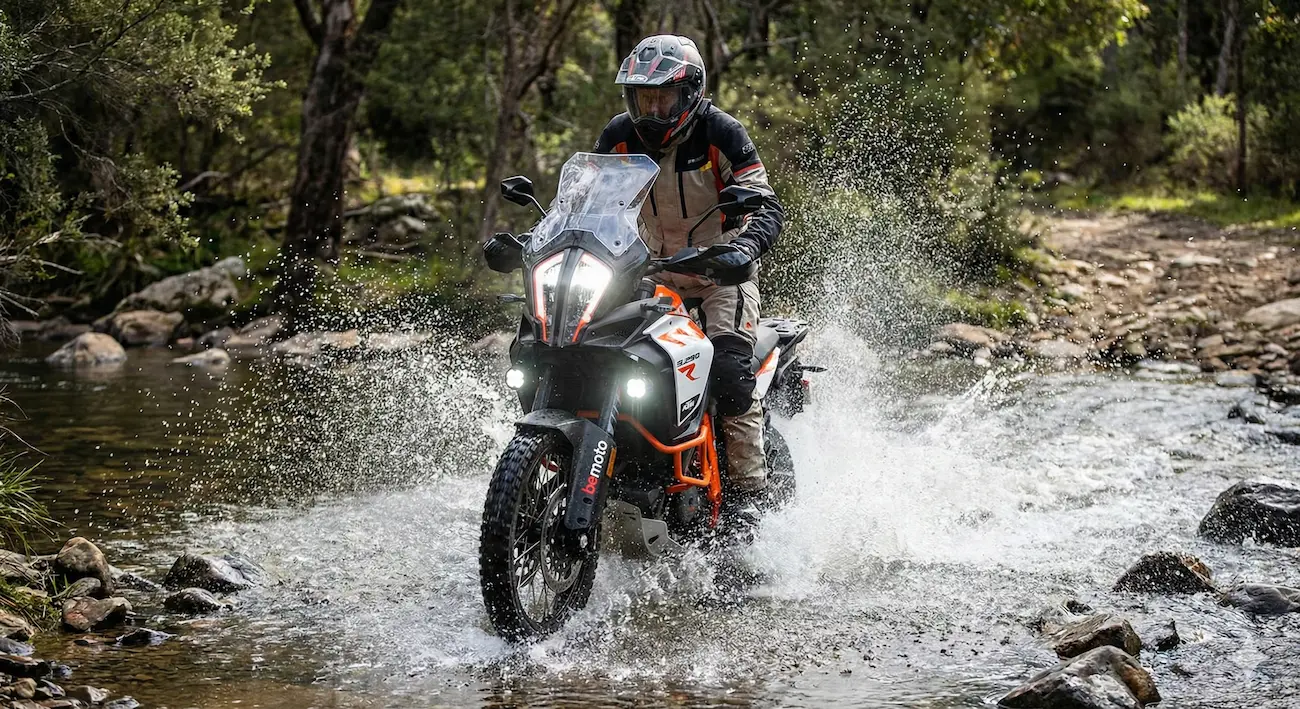
- The Power: Bikes like the KTM 1290 Super Adventure and Ducati Multistrada V4 produce 160hp+. That is superbike power in a bike on stilts.
- The Tech: Radar cruise control, semi-active suspension that adjusts 100 times a second, cornering ABS, and heated everything.
- The Weight: They are heavy. A fully loaded adventure bike can easily weigh 300kg with rider and luggage.
Some argue they have become too complex and too expensive to be "real" adventure bikes. That’s why we are seeing a resurgence of "middleweight" bikes like the Yamaha Tenere 700 and Aprilia Tuareg 660—bikes that prioritize off-road ability over gadgets.
Final thoughts
The Adventure Bike is here to stay. And why not? They are comfy, practical, and in a country with potholes as deep as ours, having long-travel suspension makes perfect sense for the daily commute.
You might never ride it across the Sahara. You might only ever use the panniers for your laptop and lunch. But when you look at it in the garage, it whispers, "We could go anywhere." And that is a powerful feeling.
If you're inspired to hit the trails or the tarmac, check out the official Dakar Rally history to see where these machines earned their stripes.