
Top 10 Motorbike security hacks
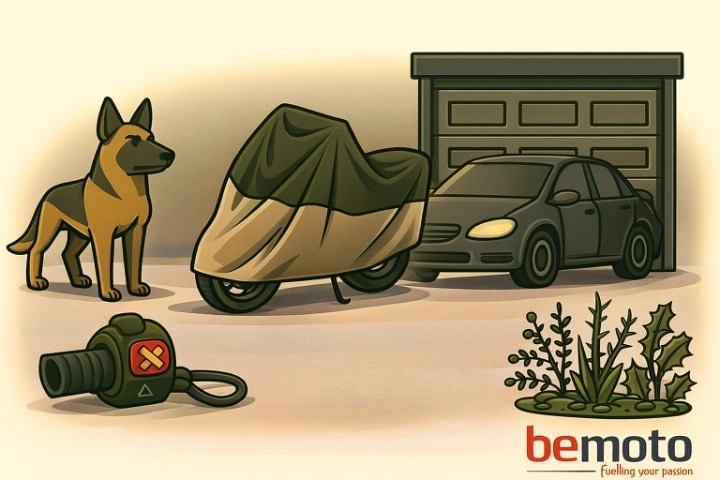
The strongest motorbike security comes from layering simple tactics rather than relying on one thing. A cover, a solid lock, good lighting, defensive planting, gravel, horn tricks, dummy keys, staging your bikes, parking the car in front and even a noisy dog all add friction for a thief. Combined, they make your bike a far less attractive target before they even think about trying.
But most riders do not have the space, budget or luxury of Fort Knox. We do not all have brick outbuildings with steel doors, CCTV networks and a pair of Dobermans patrolling the perimeter. The reality is simpler: your goal is to make your bike a bad target. And there are plenty of cheap, easy and often completely free ways to do exactly that.
Motorcycle theft remains a serious issue. Some police forces still report hundreds of two-wheeled thefts a year, according to UK police open data, and the Motorcycle Action Group continues to lobby for stronger action.
Below is a breakdown of practical, real-world security hacks that make life harder for thieves and help stop your bike from becoming the easy one to steal.
1 - Gravel
Noise is the enemy of stealth
If you are considering a new driveway, think before you commit to block paving. A long run of loose gravel is a natural alarm system. You cannot walk across sharp pea gravel quietly, and thieves know it. If they need to crunch their way across thirty feet of the stuff, they will pick an easier house instead.
For reinforcing this approach, the Police Secured by Design scheme regularly highlights natural surveillance and environmental design as effective deterrents.

2 - Landscape gardening
Sometimes nature does the work
Criminals do not enjoy crawling through thorny hedges, nettles or thick undergrowth any more than you do. Dense, jagged planting around side paths, rear access points and behind a garage makes sneaking in far riskier and far more painful.
Plants such as pyracantha, berberis and holly create natural barriers that are unpleasant to push through, difficult to climb over and noisy enough to give someone away.
Strategic landscaping is an underrated security measure because it does two things at once. It physically blocks easy routes to your property, and it increases the chance of a thief making enough noise or movement to be noticed.
Trimming the front garden neatly while deliberately letting defensive planting thicken in vulnerable spots creates a controlled layout that works in your favour without looking unkempt.
Neighbourhood Watch and police crime-prevention teams often highlight defensive planting as part of sensible home security planning. When combined with lighting, alarms and ground anchors, it forms another layer that slows an intruder, funnels them into visible areas and adds a level of discomfort most criminals will not tolerate for long.

3 - Lights
Darkness helps them. Light ruins that.
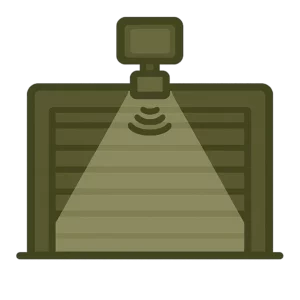
A motion-activated LED floodlight will not stop a determined thief on its own, but it forces them to work in full view. Most attacks happen at night, and thieves want privacy, not a spotlight that triggers every time they approach.
Popular choices like the Philips Hue Outdoor Sensor Light, Ring Floodlight Cam Wired Plus, and the budget-friendly Luceco LED Security Floodlight are widely used because they react quickly, illuminate large areas and stay efficient to run. You can pick up a simple IR-activated unit for about twenty quid, and they use very little power.
The Met Police often cite exterior lighting as a basic but effective part of layered home security, and adding a floodlight to your garage or driveway is one of the easiest upgrades you can make.
4 - Tape the horn
A dirty but clever trick
This one is sneaky but surprisingly effective. A small strip of insulating tape holding the horn button down means that the moment someone forces the ignition barrel with a screwdriver, the bike blasts the horn at full volume.
It is crude, low-tech and deafening, which is exactly why it works. The sudden noise shocks the thief, draws attention and often sends them running before they realise what triggered it.
It is not a replacement for a proper alarm, but it is a quick, penny-cost tactic that adds an extra tripwire if you are parking somewhere risky. It also doubles as a fun way to wind up your mates on weekend ride-outs; tape their horn down, wait for them to start the bike and enjoy the chaos.
5 - Motorbike cover
Out of sight out of mind
A simple bike cover hides your pride and joy from casual scouting and stops thieves from identifying the model, value and security you use. Criminals prefer low-effort targets; if they cannot see what they are dealing with, they are less likely to gamble.
Well-rated options such as the Oxford Stormex Motorcycle Cover, the Oxford Aquatex Motorcycle Cover, and JDC’s Ultimate Heavy Duty Waterproof Motorcycle Cover are popular because they combine thick materials, reinforced panels and decent weather resistance while keeping the bike completely out of sight.

6 - Dummy key
Distract and delay
House break-ins for vehicle keys are becoming more common. Never leave keys near the door because thieves use long hooks and rods to grab them.
If you want to add another layer of frustration for anyone snooping around, leave an old key from the same manufacturer in plain view. They take it, think they have won, then waste precious minutes trying to start the bike with the wrong key. Every delay helps.
For more guidance, the Metropolitan Police provide useful insight into key-related theft trends.
7 - Sacrifice the least favourite
Hash, but effective
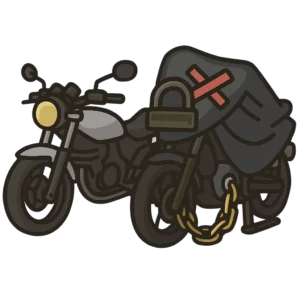
If you have two bikes, you can use a bit of psychology to your advantage. Leave the older, low-value one closest to the garage door with only basic security, and keep the good bike locked down properly at the back under a cover.
Opportunists and joyriders almost always take whatever is quickest to roll away, not the machine buried behind chains, anchors and a heavy cover.
It’s not a pleasant tactic, but if someone is determined to grab something, you are far better off losing the beater than the bike you actually care about. As part of a layered setup, this simple bit of staging can divert attention and reduce the chances of your main pride and joy being touched at all.
8 - Tactics
Daily habits matter just as much as gadgets
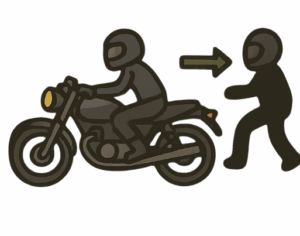
Routine is one of your strongest defences. Never leave the bike parked outside your house or garage on display. If people do not know the bike is inside, they are less likely to plan an attempt. Avoid showing off while washing or working on the bike in full public view.
In cities, stay alert on the ride home. Riders on high-end bikes have been tailed before. If someone suspicious follows you for too long, take a few detours rather than leading them straight to your garage. The MCIA’s Theft Awareness Campaign has repeatedly highlighted this tactic.
9 - Parking the car
Create a blockade
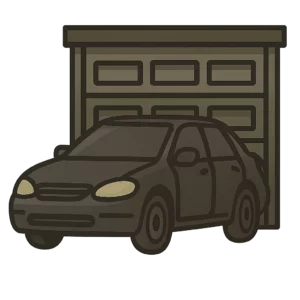
If you have the space, parking your car so it physically blocks the bike is one of the easiest and most effective barriers you can set up. A thief cannot simply wheel the bike out; they would have to move or steal the car first, which instantly adds time, effort and a lot more noise to the job.
Most opportunists walk away the moment something becomes awkward, and turning a simple roll-away into a two-vehicle problem is exactly the kind of friction they avoid.
It also works well alongside other deterrents like covers, chains and lighting, creating a layered setup that makes your bike the slowest and least appealing option on the driveway.
10 - Guard dog
Who's a good boy?
Plenty of riders joke about getting a pair of snarling guard dogs to protect the garage, but the reality is a bit more nuanced. A well-trained dog can certainly act as a deterrent. Noise, presence and unpredictability all put thieves off. Even the sound of a large dog barking can be enough to make a criminal abandon the idea of approaching a property.
But there are limits. You cannot rely on a dog as your primary form of security, and there are legal responsibilities to consider. The UK Government’s guidance on keeping dogs under control makes it clear that homeowners must ensure any dog on their property is safe, manageable and not likely to be considered dangerous. A dog that is simply alert and vocal is fine. A dog encouraged to be aggressive is not.
For most riders, the practical takeaway is simple. A dog that barks when someone approaches the drive or garage is a bonus. It adds noise, attention, unpredictability and one more thing thieves cannot control. Treat it as an extra layer, not a replacement for proper locks and alarms.

How BeMoto can help protect your bike
We offer tailored insurance for standard and modified road bikes, plus specific products for dirt bikes, laid-up machines and track bikes. Whether it is a long-term project gathering dust, a weekend green-laner or a race-prepped S1000RR, we understand what your bike means to you.
Security is deliberate, not luck
Keeping your bike safe is not about fear; it is about taking control. Every small step you take, every habit you build and every layer you add makes your bike a worse target than the one next to it. Thieves rely on ease, speed and silence. Your job is to remove all three.
None of these hacks will turn your home into an impenetrable stronghold, but together they create friction, noise, delay and uncertainty. That is what stops opportunists and frustrates the organised ones. You do not need perfection. You need to be the bike they decide is not worth the trouble.
Be consistent, be intentional and never assume one trick or device is enough on its own. Make your security obvious, awkward and time-consuming, and most criminals will move on long before they get anywhere near your pride and joy.
Enjoyed this post?
Dive into more insights, stories, and tips across The Pit Stop, there’s plenty more waiting for you!
Don’t forget to subscribe to the mailing list for fresh content, insider perks, and updates delivered straight to your inbox! See the sign up form below.